
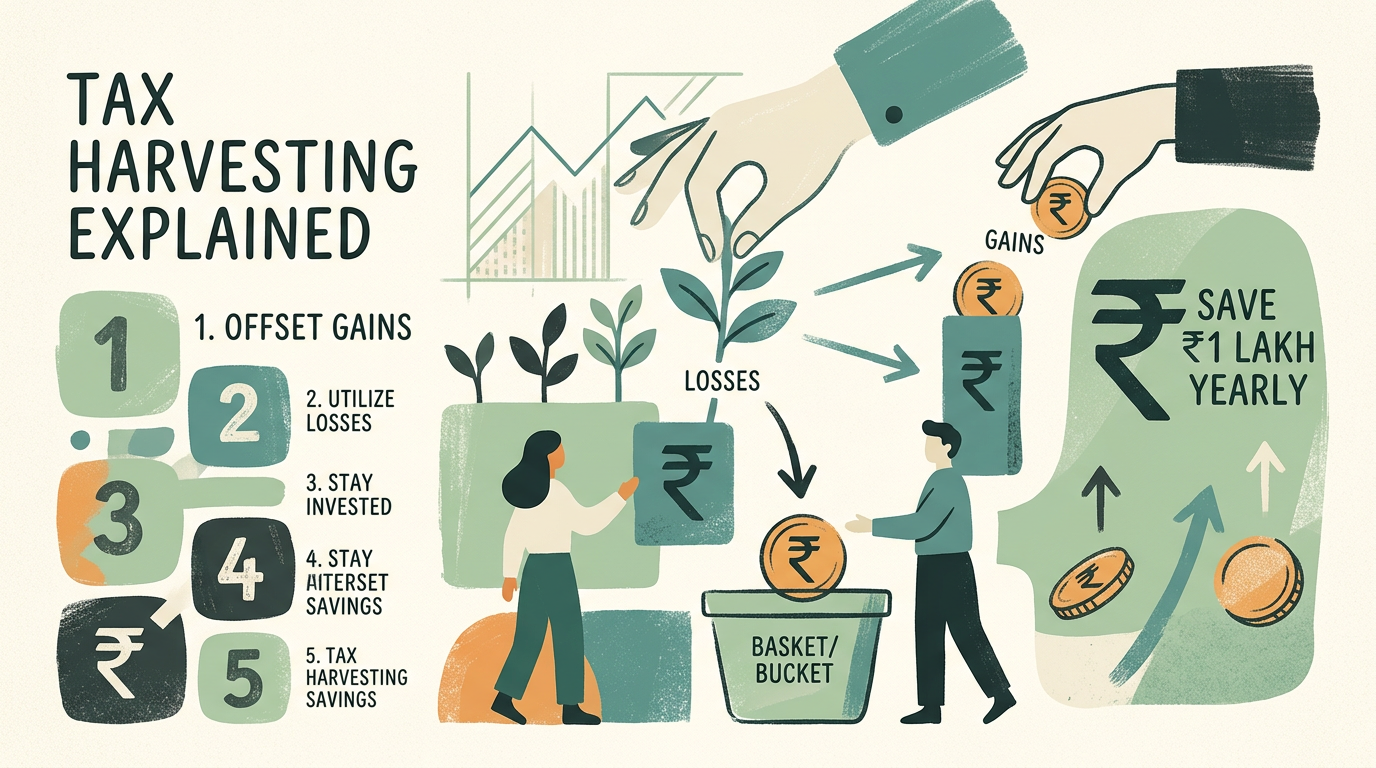
Navigating the complexities of the Indian financial landscape requires more than just picking the right stocks. It requires a strategic approach to tax harvesting explained as a method to optimize your annual tax liability legally.
Many investors remain unaware of how they can effectively reduce their capital gains tax burden. By understanding the nuances of tax-loss and tax-gain harvesting, you can keep more of your hard-earned money.
The Core Concept of Tax Harvesting
At its simplest, tax harvesting explained involves the deliberate realization of capital gains or losses to offset your overall tax obligation. In India, the Reserve Bank of India provides the regulatory framework that makes such financial maneuvers possible within the equity markets.
When you sell a stock at a profit, you incur a tax liability. Conversely, selling at a loss can reduce your taxable income. Mastering this balance is essential for effective money management.
1. Understanding Long-Term Capital Gains (LTCG)
In India, gains from equity shares held for more than one year are classified as Long-Term Capital Gains. Currently, LTCG on equity is taxed at 10% for gains exceeding ₹1 Lakh in a financial year.
This ₹1 Lakh exemption is the cornerstone of tax harvesting explained for long-term investors. By selling stocks that have appreciated, you can realize up to ₹1 Lakh in gains tax-free every single year.
Once you sell, you can immediately rebuy the same stocks. This resets your cost of acquisition to the current market price, effectively reducing your future tax liability when you eventually sell for a higher price.
2. The Strategy of Tax-Loss Harvesting
If you have stocks in your portfolio that are currently trading below your purchase price, you can utilize them for tax-loss harvesting. This is a critical component when getting tax harvesting explained to retail investors.
You sell the loss-making stock to realize a capital loss. This loss can then be used to offset your capital gains, thereby reducing your total tax liability for the financial year.
It is important to note that short-term capital losses can be set off against both short-term and long-term capital gains. This flexibility makes it a powerful tool for portfolio optimization.
3. Implementing the Rebuy Mechanism
The most common question regarding tax harvesting explained is whether it is legal to sell and instantly rebuy the same stock. Under current Indian tax laws, this is perfectly legal.
By selling a stock to book a profit up to the ₹1 Lakh limit and buying it back immediately, you are not evading taxes; you are utilizing a government-provided exemption. This is a legitimate strategy for tax optimization.
Ensure you maintain proper records of all transactions. While the process is straightforward, keeping track of your updated purchase price is vital for calculating future gains correctly.
4. Avoiding Common Pitfalls
While tax harvesting explained sounds simple, investors must be cautious. Do not let tax considerations override your fundamental investment thesis.
Never sell a high-quality stock just to harvest gains if you do not intend to hold it long-term. Additionally, consider the impact of brokerage fees and transaction charges, as these can eat into the tax savings.
Always consult with a qualified tax professional before executing large-scale harvesting strategies. Your specific financial situation may vary based on your total income and tax slab.
5. The Long-Term Impact on Wealth
Consistently applying the principles of tax harvesting explained can lead to significant wealth accumulation over a decade. By saving ₹10,000 to ₹20,000 in taxes annually, you allow that capital to remain invested and compound.
The power of compounding, when combined with tax efficiency, is the secret weapon of successful investors. Over time, these small savings translate into substantial growth in your net worth.
Ultimately, tax harvesting explained is about taking control of your financial future. It is a proactive approach to investing that ensures you are not paying a single rupee more in taxes than you are legally required to.
As you continue your journey, remember that tax harvesting explained is just one piece of the puzzle. Combine it with disciplined investing and a long-term perspective to achieve your financial goals.