When you start your journey into wealth creation, understanding the difference between regular vs direct mutual funds is the single most important decision you will make. Many investors unknowingly lose lakhs of rupees over their lifetime by choosing the wrong route.
In this guide, we break down why opting for direct plans is the superior strategy for long-term wealth. If you are serious about money management, you must understand how these structures impact your portfolio.
Understanding the Core Difference
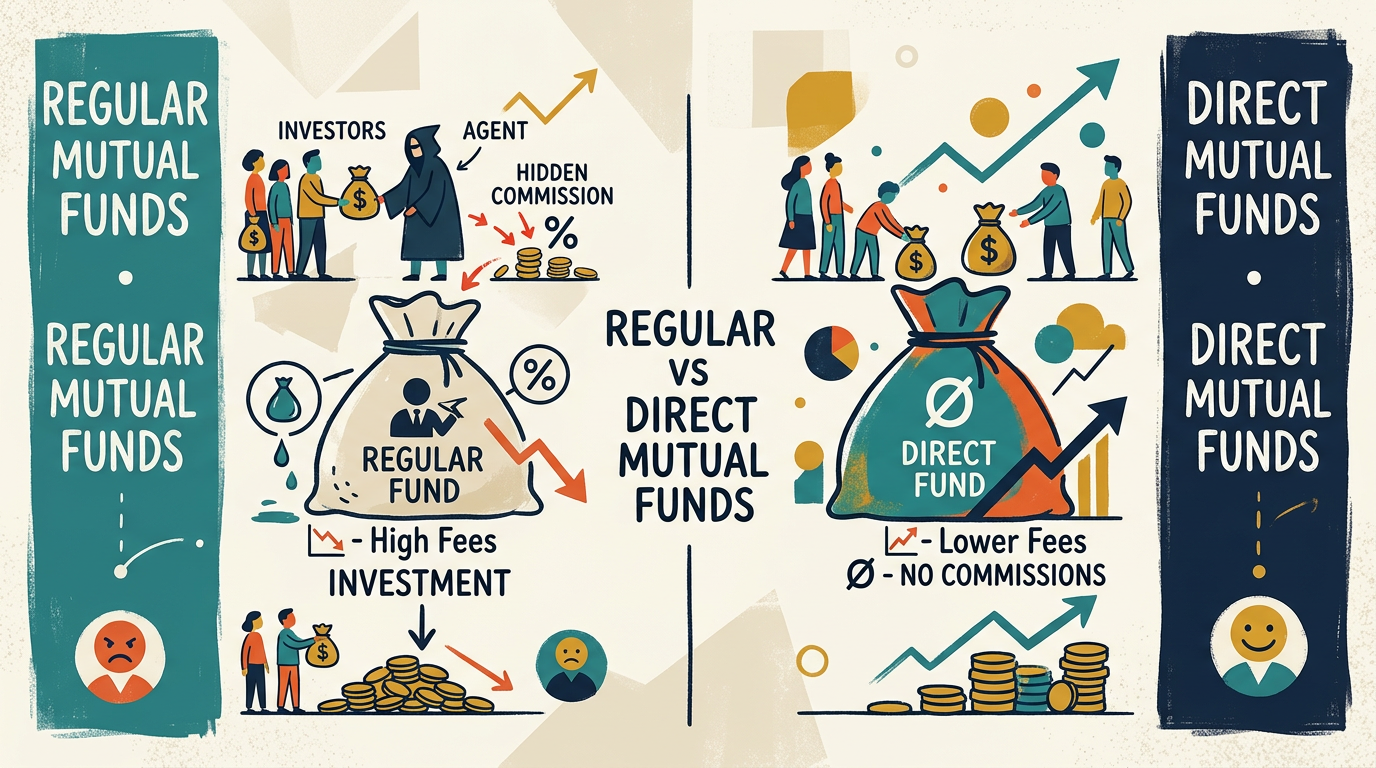
The primary difference between these two lies in the distribution channel. When you invest in a regular fund, you are essentially paying a commission to a distributor, broker, or bank.
Conversely, regular vs direct mutual funds comparisons highlight that direct funds are purchased directly from the Asset Management Company (AMC). By cutting out the middleman, you eliminate the commission, which is then passed back to you as higher returns.
1. The Hidden Cost of Regular Funds
Regular funds come with a higher Expense Ratio because they include the distributor’s commission. This commission is deducted from your investment daily, meaning you don’t see it as a separate bill.
Over 20 or 30 years, this small percentage difference compounds significantly. You could be paying ₹5,00,000 or more in hidden fees without ever realizing it. Always check the expense ratio before you commit your capital.
2. Why Direct Funds Outperform
Because direct plans have no commission component, their expense ratio is lower. This lower cost structure directly translates into a higher Net Asset Value (NAV) for the investor.
When you analyze regular vs direct mutual funds, the math is simple: lower costs equal higher compounding. Even a 1% difference in expense ratio can lead to a massive disparity in your final corpus over a long investment horizon.
3. Transparency and Control
Investing directly gives you complete control over your portfolio. You are not reliant on a broker who might have a conflict of interest, such as pushing a fund that pays them a higher commission.
Direct investing forces you to become a more educated investor. You learn to research funds based on performance, risk, and strategy rather than relying on biased advice. For official regulatory updates, you can always refer to the Reserve Bank of India guidelines.
4. Ease of Access via Digital Platforms
In the past, investing directly was considered difficult. Today, technology has made it incredibly simple to invest in direct plans through various online platforms and AMC websites.
The process of switching from regular vs direct mutual funds is now seamless. Most platforms allow you to switch your existing regular investments to direct plans, though you must be mindful of potential exit loads and tax implications.
5. The Power of Compounding
Compounding is the eighth wonder of the world, but it works both ways. It can grow your wealth, or it can grow the broker’s commission at your expense.
By choosing direct plans, you ensure that every rupee of your investment is working for you. When you compare regular vs direct mutual funds, remember that you are not just saving a small fee; you are capturing the full potential of market growth.
Conclusion: The Path to Financial Freedom
Choosing between regular vs direct mutual funds is not just a technicality; it is a fundamental pillar of successful investing. By cutting out the middleman, you keep more of your hard-earned money.
If you want to build a robust portfolio, prioritize low-cost, direct investment options. The difference in regular vs direct mutual funds performance is the difference between an average retirement and a wealthy one.
Always stay informed, keep your costs low, and watch your wealth grow over time. Understanding regular vs direct mutual funds is the first step toward taking full responsibility for your financial future.