
Understanding your financial health is the first step toward long-term wealth. Many individuals struggle to grasp the credit utilization ratio meaning, yet it remains one of the most critical factors in determining your credit score.
When you constantly hover near your credit limit, lenders view this as a sign of financial distress. Maintaining a healthy balance is essential for accessing better loan terms and lower interest rates in the future.
What is Credit Utilization Ratio Meaning?
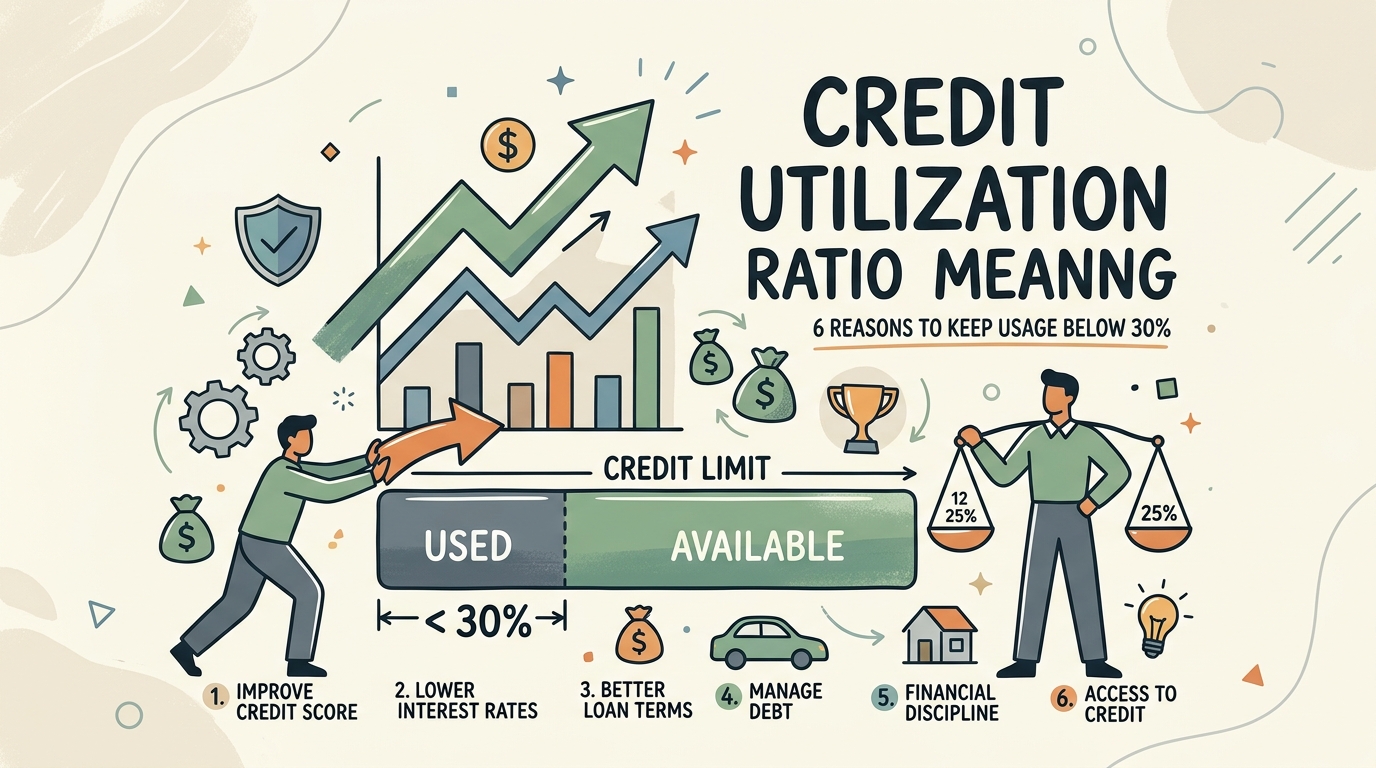
At its core, the credit utilization ratio meaning refers to the percentage of your total available credit that you are currently using. If you have a credit card with a limit of ₹1,00,000 and you have a balance of ₹30,000, your ratio is 30%.
Banks and financial institutions monitor this metric closely. They use it to assess how reliant you are on borrowed money. A high ratio suggests that you might be struggling to manage your finances effectively.
1. Why Banks View High Utilization as a Risk
When your utilization is high, it signals to lenders that you are living beyond your means. Banks prefer borrowers who demonstrate disciplined money management habits. If you consistently max out your cards, you appear desperate for credit.
This perception can lead to rejected loan applications or higher interest rates. Lenders want to see that you have access to credit but do not necessarily need to use all of it.
2. The Golden Rule: Keeping Below 30%
Financial experts consistently recommend keeping your utilization below 30%. This threshold acts as a safety buffer that signals stability to credit bureaus. By staying under this limit, you prove that you are using credit as a tool rather than a crutch.
Even if you pay your bill in full every month, a high statement balance can hurt your score. This is because the balance reported to the bureaus is often the one on your statement date.
3. How Utilization Impacts Your Credit Score
Your credit score is a reflection of your reliability. A significant portion of your score is calculated based on the credit utilization ratio meaning. When this ratio spikes, your score can drop rapidly, even if you have never missed a payment.
A lower ratio demonstrates that you have sufficient liquidity. It shows that you are not dependent on high-interest credit to cover your daily expenses.
4. Strategies to Lower Your Ratio Effectively
One effective way to improve your ratio is to request a credit limit increase. If your income has grown, your bank may be willing to raise your limit. A higher limit naturally lowers your utilization percentage if your spending remains constant.
Another strategy is to make multiple payments throughout the month. By paying down your balance before the statement closing date, you ensure that a lower figure is reported to the credit bureaus.
5. Monitoring Your Credit Regularly
You should keep a close eye on your credit reports to ensure accuracy. If you notice errors, you must report them immediately to the Reserve Bank of India regulated credit bureaus. Staying informed is the best way to protect your financial reputation.
Understanding the credit utilization ratio meaning allows you to take control of your financial narrative. By keeping your usage low, you position yourself as a low-risk borrower.
6. The Long-Term Benefits of Controlled Spending
Maintaining a low ratio is not just about a score; it is about financial freedom. When you avoid maxing out your cards, you avoid the trap of high-interest debt. This allows you to allocate more funds toward investments and savings.
Remember that the credit utilization ratio meaning is dynamic. It changes every month based on your spending and payment habits. Consistent effort leads to a stronger financial foundation.
Ultimately, mastering the credit utilization ratio meaning is a hallmark of a financially literate individual. By keeping your utilization below 30%, you signal to the world that you are in control of your financial future.
If you are looking to optimize your financial habits, always remember that the credit utilization ratio meaning is a key metric. Keep your balances low and your credit score high to unlock better opportunities.
Finally, always remember that the credit utilization ratio meaning is a reflection of your discipline. Stay consistent, stay informed, and keep your credit utilization ratio meaning in check.