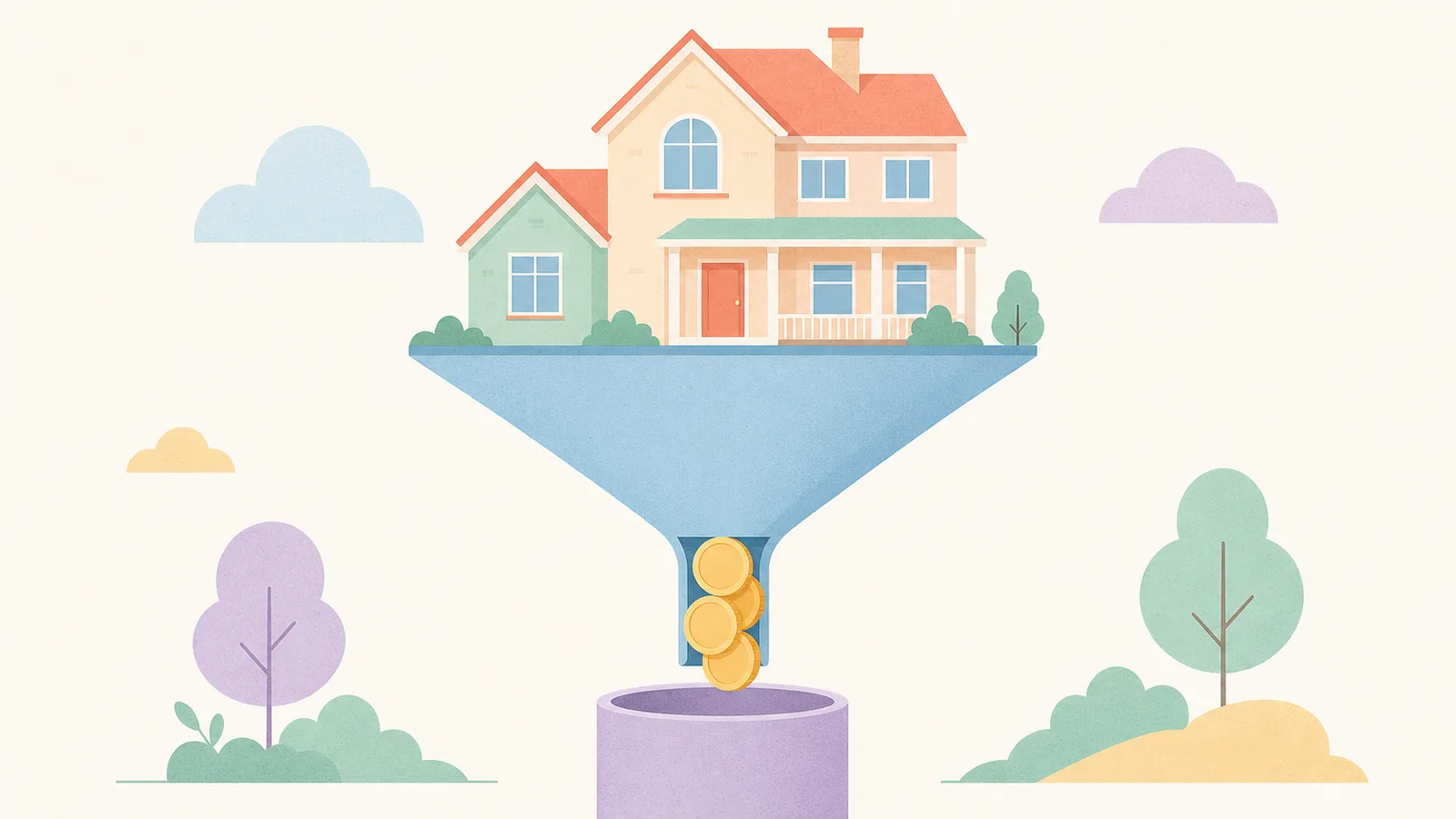
The enduring Indian fixation on real estate as the ultimate safe haven, the infallible generational asset, is not just an investment strategy; it’s a deeply ingrained cultural and psychological phenomenon. Yet, for the discerning investor, this conventional wisdom represents a profound economic paralysis – a wealth illusion sustained by potent behavioral biases and now, a shifting tax landscape that further erodes its purported benefits.
The Psychological Fortress: Why We Cling to Concrete
At its core, the Indian property obsession is a masterclass in behavioral economics. Two biases stand out: the Endowment Effect and Loss Aversion. We intrinsically overvalue assets we own (endowment effect), making it exceedingly difficult to part with property, even when market conditions or personal financial goals dictate otherwise. This is exacerbated by loss aversion, the psychological pain of realizing a loss being twice as powerful as the pleasure of an equivalent gain. Selling a property at a perceived discount, even if it frees up capital for higher-return alternatives, feels like a monumental defeat.
Furthermore, Mental Accounting plays a critical role. The ‘family home’ is compartmentalized as a non-financial asset, exempt from the rigorous return expectations applied to stocks or mutual funds. Investment properties, too, often fall victim to anchoring – our decisions tethered to an original purchase price or a fleeting market peak, blinding us to the true opportunity cost of capital locked in an illiquid asset. This isn’t rational economics; it’s emotional economics.
The Illusion of Liquidity and the True Cost Equation
Property, despite its tangible nature, is profoundly illiquid. Unlike listed equities or mutual fund units, which can be transacted in seconds, selling real estate involves months of effort, significant transaction costs (brokerage, stamp duty), and market dependency. This illiquidity traps capital, preventing reallocation to more promising ventures or urgent financial needs.
Beyond the principal and interest (EMI), the “true cost” of property ownership is a silent wealth incinerator. Consider:
- Maintenance & Repairs: Annual outlays that rarely get factored into return calculations.
- Property Taxes & Insurance: Ongoing, non-recoverable expenses.
- Opportunity Cost: The most insidious drain. The capital locked in a property could, for instance, be generating superior, more liquid, and tax-efficient returns in diversified equity mutual funds. If your property appreciates 6% annually, but a well-managed equity portfolio returns 12%, your real estate effectively costs you 6% per year in lost earnings.
The New Tax Equation: Post-July 2024 Real Estate Realities
The July 23, 2024, budget reforms delivered a substantial blow to the assumed tax efficiency of real estate. For properties acquired on or after July 23, 2024, the rules are stark:
- Long-Term Capital Gains (LTCG) on real estate (held for more than 24 months) are now taxed at a flat 12.5% without the benefit of indexation. This is a critical change. Indexation, which adjusted the purchase cost for inflation, was a significant shield against capital gains tax. Its absence means a much higher taxable gain, especially in inflationary environments.
For properties acquired before July 23, 2024, there’s a grandfathering clause, allowing resident individual sellers to compute tax as EITHER 12.5% without indexation OR 20% with indexation, and pay whichever is lower. While this provides some relief for legacy holdings, it underscores the increased tax burden for future acquisitions.
Let’s illustrate the impact. A property bought for ₹1 Crore today, sold for ₹2 Crore in 10 years (assuming 7.2% CAGR), yields a ₹1 Crore gain. Under the new regime, this entire ₹1 Crore is taxed at 12.5%, equating to ₹12.5 Lakhs in tax. Previously, with indexation (say, 5% inflation annually), the indexed cost would be much higher, significantly reducing the taxable gain. This legislative shift fundamentally alters the post-tax return profile of real estate, making it demonstrably less attractive compared to listed equities, where LTCG exceeding ₹1.25 Lakh per financial year is taxed at 12.5%, still a preferential rate for a liquid asset.
The psychological comfort of a physical asset blinds many to this evolving economic reality. The ‘safe’ investment is now burdened by higher effective taxation and the ongoing drag of illiquidity and hidden costs.
The MoneyExplain Takeaway
The uncritical embrace of real estate as the primary wealth-building tool in India is an economic fallacy. It’s a behavioral trap where sentiment overrides arithmetic, and illiquidity silently bleeds opportunity. As the financial landscape shifts, particularly with the critical changes in capital gains taxation, the prudent investor must challenge this sacred cow.
Perform a rigorous, dispassionate analysis of your property holdings. Calculate not just appreciation, but also the true Internal Rate of Return (IRR) factoring in all costs and, crucially, the opportunity cost. Compare these post-tax, post-inflation returns against liquid, diversified portfolios. Your generational wealth will not be built on emotional attachment to brick and mortar, but on sound financial economics and a willingness to transcend ingrained biases. It’s time to re-evaluate what “safe” truly means for your portfolio.
Full Net Real Return
Compounded Fee & Inflation Friction
Editorial Policy: MoneyExplain is an independent personal finance and macroeconomic publication. We do not offer investment advice, stock tips, or sell sponsored articles. Mutual Fund and equity investments are subject to market risks.