
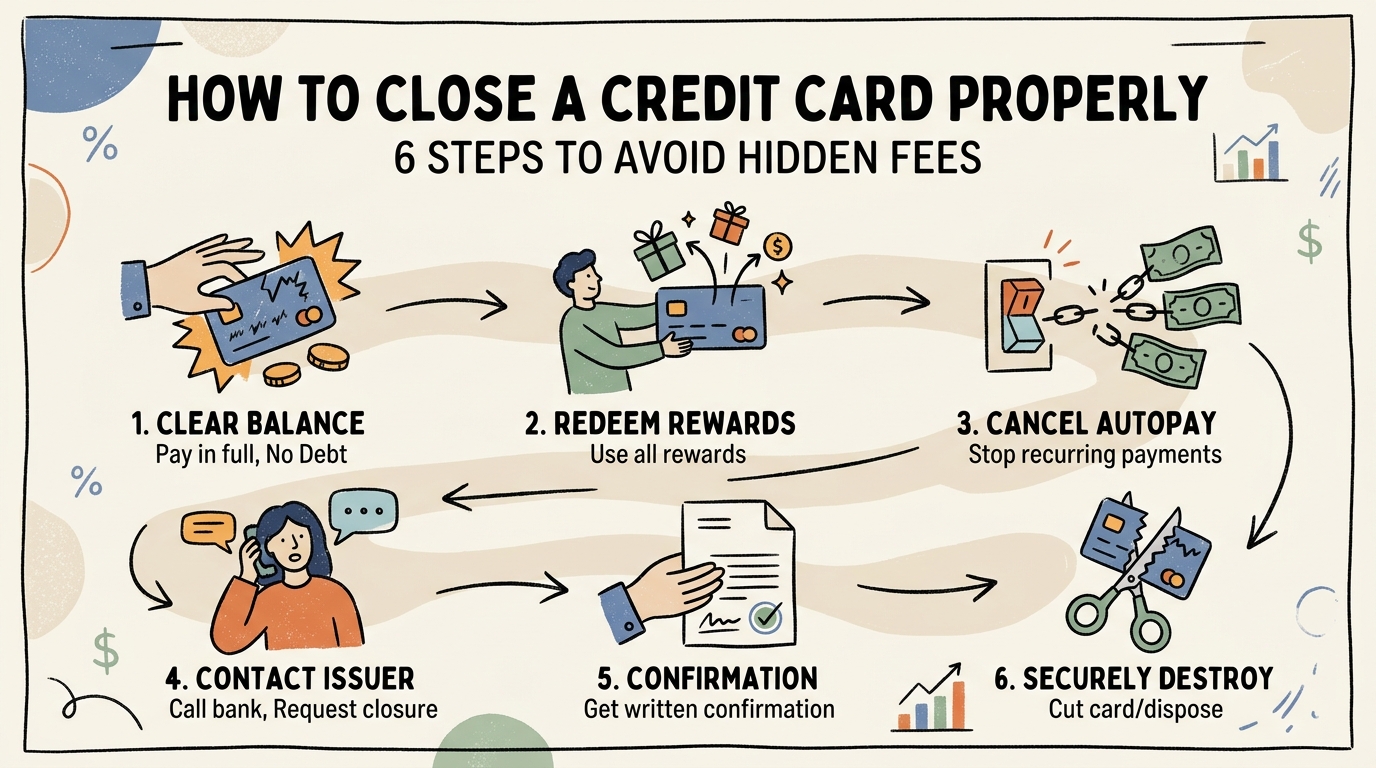
Managing your finances effectively requires knowing when to prune your credit portfolio. If you are wondering how to close a credit card properly, you have come to the right place. Simply cutting up your plastic card is not enough to terminate your legal obligation to the bank.
Improperly closing an account can lead to lingering annual fees, hidden interest charges, and a negative impact on your credit score. To ensure your financial health remains intact, you must follow a formal procedure. This guide will walk you through the essential steps to protect your credit history.
Understanding the Implications of Closing a Credit Card
Before you initiate the process, consider how it affects your credit utilization ratio. Closing a card reduces your total available credit, which might cause your score to dip temporarily. However, if you are struggling with debt, prioritizing money management is far more important than keeping an unused account open.
1. Clear All Outstanding Dues
The first step in learning how to close a credit card properly is to ensure your balance is zero. Banks will not process a closure request if there is even a single rupee of outstanding debt. Check your latest statement for any unbilled transactions or pending EMIs.
Pay off the entire amount, including any interest or late fees accrued. If you have any auto-debit instructions linked to the card, such as utility bills or insurance premiums, cancel them immediately. Failure to do so will result in a declined closure request.
2. Redeem Your Reward Points
Most credit cards offer loyalty or reward points that accumulate over time. Once you close the account, these points are typically forfeited. Before you start the closure process, log into your net banking portal to check your balance.
Redeem these points for vouchers, products, or statement credits. If the points are insufficient for a major redemption, consider donating them if the bank provides that option. Do not let your hard-earned rewards go to waste.
3. Submit a Formal Closure Request
You cannot simply stop using the card. You must inform the bank through an official channel. Most banks now accept closure requests via their mobile app, net banking, or by sending an email to their official customer support address.
When you ask how to close a credit card properly, remember that a written request is your best protection. Keep a copy of the email or the reference number provided by the customer care executive. This serves as proof that you initiated the request on a specific date.
4. Destroy the Physical Card
Once you have submitted your request, the bank will eventually deactivate the card. However, you should not wait for the deactivation to dispose of it. Use a pair of scissors to cut the card into multiple pieces, ensuring that the magnetic strip and the EMV chip are destroyed.
This prevents anyone from misusing your card details if it were to be stolen or found. It is a simple yet crucial security measure in the process of how to close a credit card properly. Never throw the card in the trash without cutting it first.
5. Obtain the No Objection Certificate (NOC)
This is the most critical step that many people overlook. After the bank processes your request, they must provide you with a closure letter or a No Objection Certificate (NOC). This document confirms that your account is closed and you have no pending dues.
If the bank does not send this automatically, follow up after 10-15 business days. Having an NOC is your legal safeguard against future claims of unpaid dues. Always verify the details on the NOC to ensure they match your records.
6. Monitor Your Credit Report
Even after receiving the NOC, your job is not entirely finished. It can take 30 to 45 days for the bank to report the closure to credit bureaus like CIBIL. You should monitor your credit report to ensure the status of the card is updated to ‘Closed’.
If the status remains ‘Active’ after two months, contact the bank immediately with your NOC. Checking your report is a vital part of how to close a credit card properly. For more information on financial regulations, you can visit the Reserve Bank of India website.
Final Thoughts on Credit Card Management
Learning how to close a credit card properly is an essential skill for anyone aiming for financial discipline. By following these steps, you avoid the risk of unexpected charges and protect your credit score from unnecessary damage.
Remember, the goal is to maintain a healthy credit profile. If you are closing a card because you cannot manage your spending, consider creating a budget instead. If you follow the steps above, you will successfully close your account without any lingering headaches.
Ultimately, how to close a credit card properly boils down to communication and documentation. Never assume the bank has closed your account until you have the NOC in your hand. Stay vigilant, keep your records, and maintain your financial freedom.
By mastering how to close a credit card properly, you take control of your financial future. Ensure you follow these steps precisely to avoid any issues down the line. Knowing how to close a credit card properly is just one part of being a smart consumer.