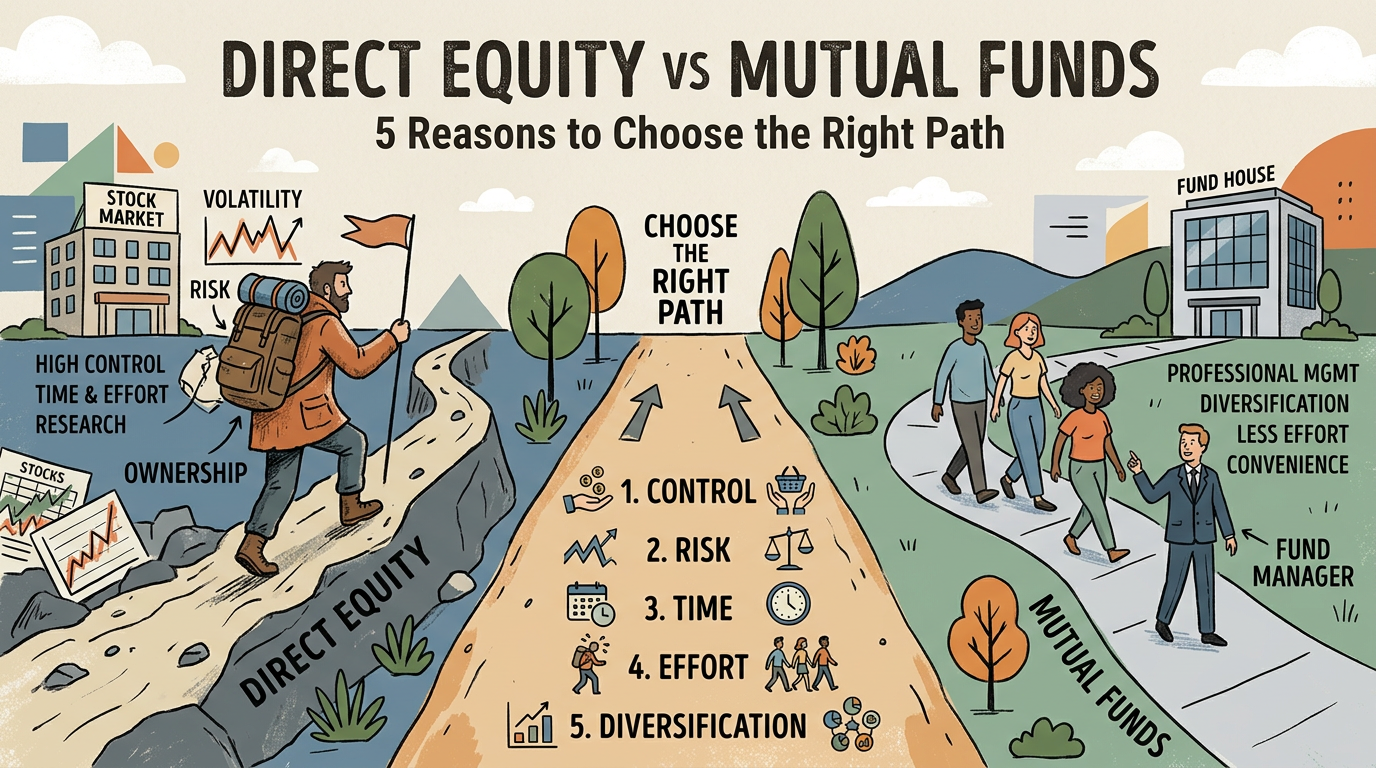
Choosing between direct equity vs mutual funds is like deciding whether to cook a gourmet meal at home or hire a professional chef to manage your kitchen. Both paths aim to satisfy your financial hunger, but they require vastly different levels of skill, time, and risk appetite.
In the world of investing, your capital is the raw ingredient. Whether you choose to handle it yourself or delegate it to an expert, your goal is to build wealth over the long term. Understanding the nuances of direct equity vs mutual funds is essential for every Indian investor looking to grow their portfolio.
Understanding the Core Differences
At its core, direct equity vs mutual funds represents the difference between active control and professional delegation. When you buy direct stocks, you are the portfolio manager. You decide which companies to buy, when to enter, and when to exit.
Conversely, investing in mutual funds means you are pooling your money with other investors. A professional fund manager makes the investment decisions based on a specific strategy. This money management approach is often preferred by those who lack the time to track market movements daily.
1. The Time Commitment of Direct Equity
Cooking your own dinner requires grocery shopping, preparation, and cooking. Similarly, direct equity vs mutual funds highlights that direct investing demands significant research. You must analyze balance sheets, track quarterly earnings, and monitor industry trends.
If you have ₹5,00,000 to invest, you cannot simply pick stocks at random. You need to understand the business model of every company in your portfolio. Without this dedication, you are merely gambling rather than investing.
2. The Professional Expertise of Mutual Funds
Hiring a chef is about paying for expertise. Mutual funds operate on this principle. You pay a small expense ratio to have a professional manage your assets. This is the primary advantage in the direct equity vs mutual funds debate for busy professionals.
Fund managers have access to research teams and data that individual investors often lack. They ensure your portfolio is diversified, reducing the impact of a single company’s failure on your total wealth.
3. Managing Risk and Volatility
Risk is inherent in both paths. However, direct equity vs mutual funds involves different risk profiles. Direct equity can be highly volatile; a single bad news cycle can wipe out significant value in a day.
Mutual funds offer the benefit of diversification. By holding a basket of stocks, the volatility of one is offset by the stability of another. For regulatory oversight and safety guidelines, always refer to the Reserve Bank of India guidelines to understand the broader financial ecosystem.
4. Cost Efficiency and Expense Ratios
Many investors argue that direct equity vs mutual funds favors direct equity because there are no management fees. While true, you must factor in brokerage charges and the opportunity cost of your time.
Mutual funds charge an expense ratio, which is deducted from the fund’s returns. While this reduces your net profit, it is often a small price to pay for the professional oversight and convenience provided by the fund house.
5. Tax Implications for Indian Investors
Taxation is a crucial factor when analyzing direct equity vs mutual funds. In India, Long Term Capital Gains (LTCG) tax applies to both, but the thresholds and rules can vary based on the type of fund or stock holding period.
Always consult with a financial advisor to understand how your specific investment choices will impact your tax liability. Efficient tax planning is just as important as choosing the right asset class for your goals.
Which Path Should You Choose?
The debate of direct equity vs mutual funds does not have a one-size-fits-all answer. If you enjoy analyzing markets and have the time to dedicate to research, direct equity can be rewarding. It offers complete control and the potential for higher alpha.
However, if you prioritize peace of mind and professional management, mutual funds are the superior choice. Most investors find that a hybrid approach—or sticking to mutual funds—is the most sustainable way to achieve financial freedom.
Ultimately, your success depends on discipline, consistency, and your ability to stay invested regardless of market noise. Whether you cook or hire a chef, the most important thing is that you actually start the meal.