
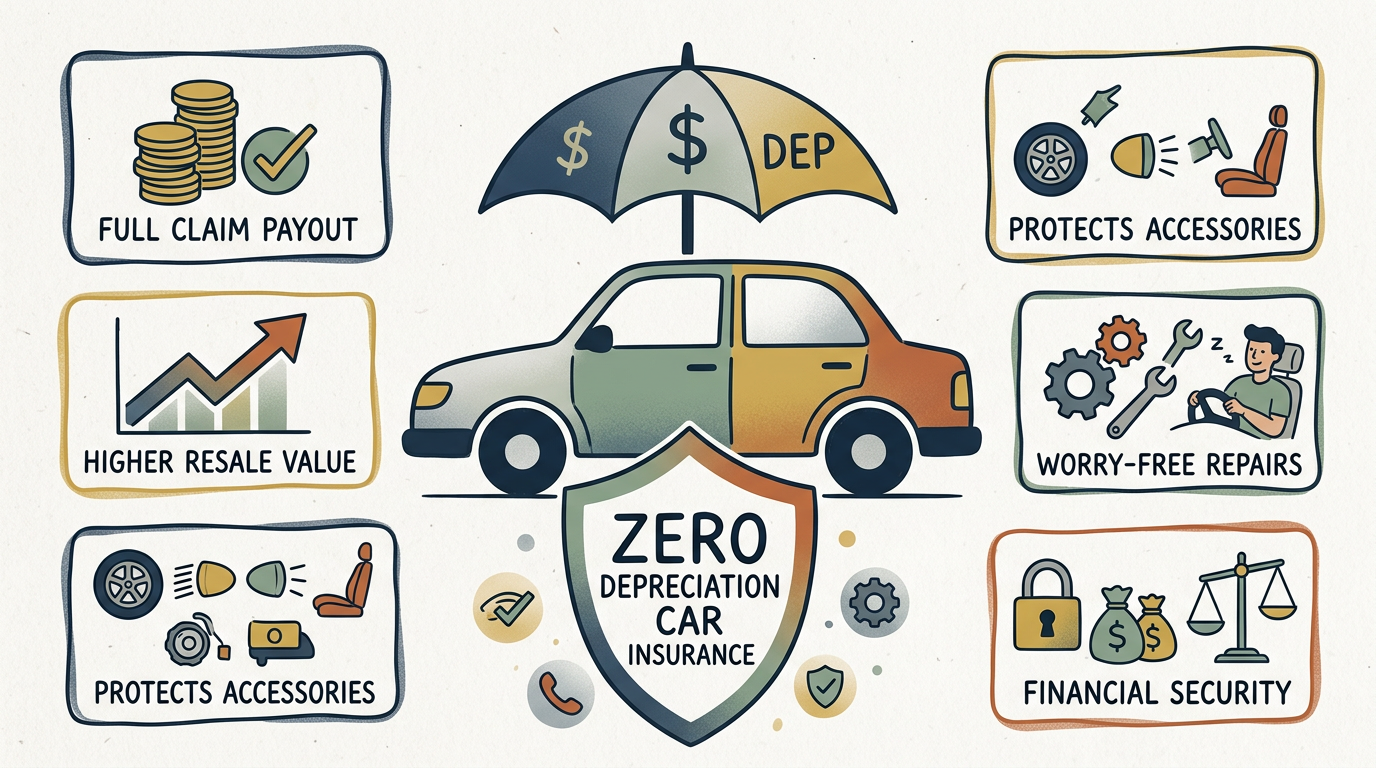
When you purchase a new vehicle, you naturally want to protect your investment. However, many car owners are shocked to discover that a standard policy does not cover the full cost of repairs after an accident. This is where zero depreciation car insurance becomes a vital financial tool for every vehicle owner.
In the world of insurance, depreciation is the reduction in the value of your car parts over time due to wear and tear. Standard policies deduct this depreciation from your claim settlement, forcing you to pay a significant portion of the repair costs out of your own pocket. Understanding how zero depreciation car insurance works can save you thousands of rupees.
What Exactly is Zero Depreciation Car Insurance?
Often referred to as “bumper to bumper” or “nil depreciation” cover, this add-on provides comprehensive protection. Unlike standard plans, it ignores the age of your vehicle parts when calculating your claim amount. This means you receive the full value of the replacement parts without any deductions for depreciation.
For those interested in broader financial health, you can learn more about effective money management strategies to ensure you are always prepared for unexpected expenses. Protecting your assets is a cornerstone of personal finance.
1. How Depreciation Affects Your Standard Claim
Standard insurance policies apply depreciation rates based on the material of the part. For example, rubber, nylon, and plastic parts often face a 50% depreciation deduction. If a plastic bumper costs ₹10,000 to replace, the insurer might only pay ₹5,000, leaving you to cover the rest.
When you opt for zero depreciation car insurance, these deductions are eliminated. The insurer pays the full cost of the parts, regardless of whether they are plastic, rubber, or metal. This is particularly beneficial for luxury cars or vehicles with expensive components.
2. The Financial Advantage of Bumper to Bumper Cover
The primary benefit of this cover is peace of mind. Accidents are unpredictable, and repair costs for modern vehicles are rising rapidly. By paying a slightly higher premium for zero depreciation car insurance, you avoid the financial burden of unexpected repair bills.
Consider a scenario where your car suffers major damage. Without this cover, you might end up paying ₹50,000 or more in depreciation costs. With the right policy, your out-of-pocket expense is limited to the compulsory deductible, which is a very small amount compared to the total repair cost.
3. Who Should Choose This Add-on?
While zero depreciation car insurance is an excellent choice for many, it is specifically recommended for new car owners. Since new cars have parts with high market value, the depreciation deduction can be substantial in the first few years.
It is also highly recommended for luxury car owners and those who drive in high-traffic urban areas where minor collisions are frequent. If you want to maintain your car’s value and avoid surprise costs, this add-on is essential.
4. Comparing Standard vs. Zero Dep Policies
The difference lies in the claim settlement process. A standard policy considers the age of the vehicle and the material of the part to determine the payout. A zero depreciation car insurance policy treats the part as brand new, providing a full replacement cost payout.
You can verify the regulatory guidelines regarding these policies by visiting the Reserve Bank of India website to understand the broader financial landscape. Always compare quotes to find the best balance between premium costs and coverage benefits.
5. Limitations and Exclusions to Remember
Even with zero depreciation car insurance, there are limitations. Most insurers offer this cover only for cars up to 5 years old. Additionally, it does not cover mechanical breakdowns, engine damage due to water logging (unless specified), or normal wear and tear.
Always read your policy document carefully. Ensure you understand the specific terms and conditions, including the number of claims allowed per year under the zero-depreciation clause. Being informed is the best way to maximize your insurance benefits.
In conclusion, zero depreciation car insurance is a smart investment for anyone looking to minimize financial risk. By covering the depreciation costs that standard policies ignore, it ensures that your car remains as good as new after repairs. Make sure to evaluate your driving habits and car age before finalizing your policy.