
When you purchase an insurance policy, you are essentially buying a promise. You pay premiums today to ensure your family is protected tomorrow. However, the true value of that promise is only revealed during the claims process. This is where claim settlement ratio meaning becomes the most critical metric for any policyholder.
Many people mistakenly believe that a high ratio is the only indicator of a reliable insurer. While it is a vital starting point, it does not tell the entire story of how a company treats its customers. Understanding the nuances of this metric is essential for effective money management and long-term financial security.
What is Claim Settlement Ratio?
The claim settlement ratio meaning refers to the percentage of insurance claims settled by an insurer out of the total claims received during a financial year. It is a key performance indicator used to evaluate the reliability and efficiency of an insurance company.
If an insurer receives 100 claims and settles 98 of them, their ratio is 98%. This figure is published annually by the Insurance Regulatory and Development Authority of India (IRDAI). It serves as a benchmark for transparency in the industry.
1. Why Claim Settlement Ratio Meaning Matters for Your Protection
The primary reason you buy insurance is to provide a financial safety net. If an insurer has a poor track record, your beneficiaries might face unnecessary hurdles during a time of grief. A high ratio suggests that the company has a streamlined process and a genuine intent to honor its obligations.
- It reflects the financial stability of the insurer.
- It indicates the ease of the documentation process.
- It provides peace of mind to the policyholder.
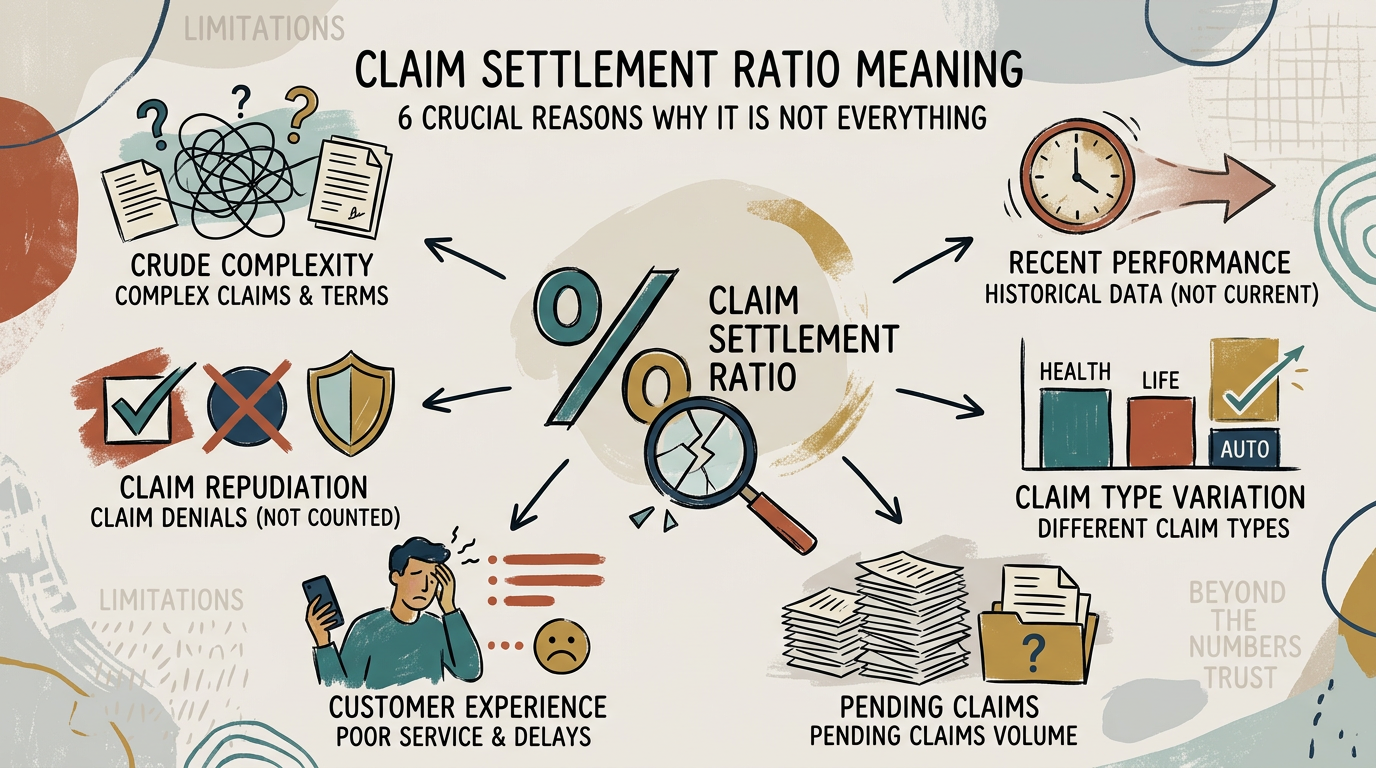
2. The Limitation of Relying Solely on the Ratio
While the claim settlement ratio meaning is important, it is not a perfect metric. It does not distinguish between claims that were settled quickly and those that took months. Furthermore, it does not account for the nature of the claims, such as whether they were rejected due to fraud or incomplete documentation.
A company might have a 99% ratio but still have a reputation for poor customer service. Always look beyond the percentage to understand the company’s overall operational efficiency.
3. Understanding the Claim Rejection Rate
To grasp the claim settlement ratio meaning, you must also look at the rejection rate. Rejections happen for various reasons, including non-disclosure of medical history or policy exclusions. If an insurer has a high rejection rate, it is a red flag that you should investigate further.
Always ensure your application form is filled with 100% accuracy. Even a minor discrepancy can lead to a claim denial, regardless of the insurer’s overall ratio.
4. Why a 99% Ratio Isn’t the Only Metric
Many buyers chase the highest possible number, but this can be misleading. An insurer might settle 99% of small claims but struggle with complex, high-value claims. You should also consider the claim settlement ratio meaning in the context of the company’s claim settlement speed.
Ask yourself: How long does it take for the money to hit the bank account? A settlement that takes six months is far less valuable than one that takes two weeks, especially when your family needs the funds for immediate expenses like ₹5,00,000 for medical bills or debt repayment.
5. Other Factors to Consider Alongside the Ratio
Beyond the claim settlement ratio meaning, you must evaluate the insurer’s solvency ratio. This indicates the company’s ability to pay long-term claims. Additionally, look at the grievance redressal ratio, which shows how many complaints the company receives relative to its size.
Check online reviews and ask your financial advisor about the company’s reputation. A balanced approach ensures you are not just looking at a single number but the entire health of the insurance provider.
6. How to Use This Knowledge for Your Financial Plan
Now that you understand the claim settlement ratio meaning, use it as a filter rather than a final decision-maker. Start by shortlisting companies with a consistent ratio of over 95% over the last five years. Then, compare their premium costs and policy features.
Remember that your goal is to secure your family’s future. Whether you are looking for a term plan worth ₹1,00,00,000 or a health policy with a cover of ₹10,00,000, the insurer’s commitment to settling claims is paramount.
In conclusion, the claim settlement ratio meaning is a powerful tool for any informed investor. However, it is just one piece of the puzzle. By combining this data with solvency ratios and customer service feedback, you can make a choice that truly protects your wealth and your loved ones.
Always prioritize transparency and reliability over the lowest premium. Your insurance policy is a long-term contract, and you deserve an insurer that stands by its word when it matters most.
The claim settlement ratio meaning is ultimately about trust. Ensure you place that trust in a company that has proven its dedication to its policyholders year after year.