
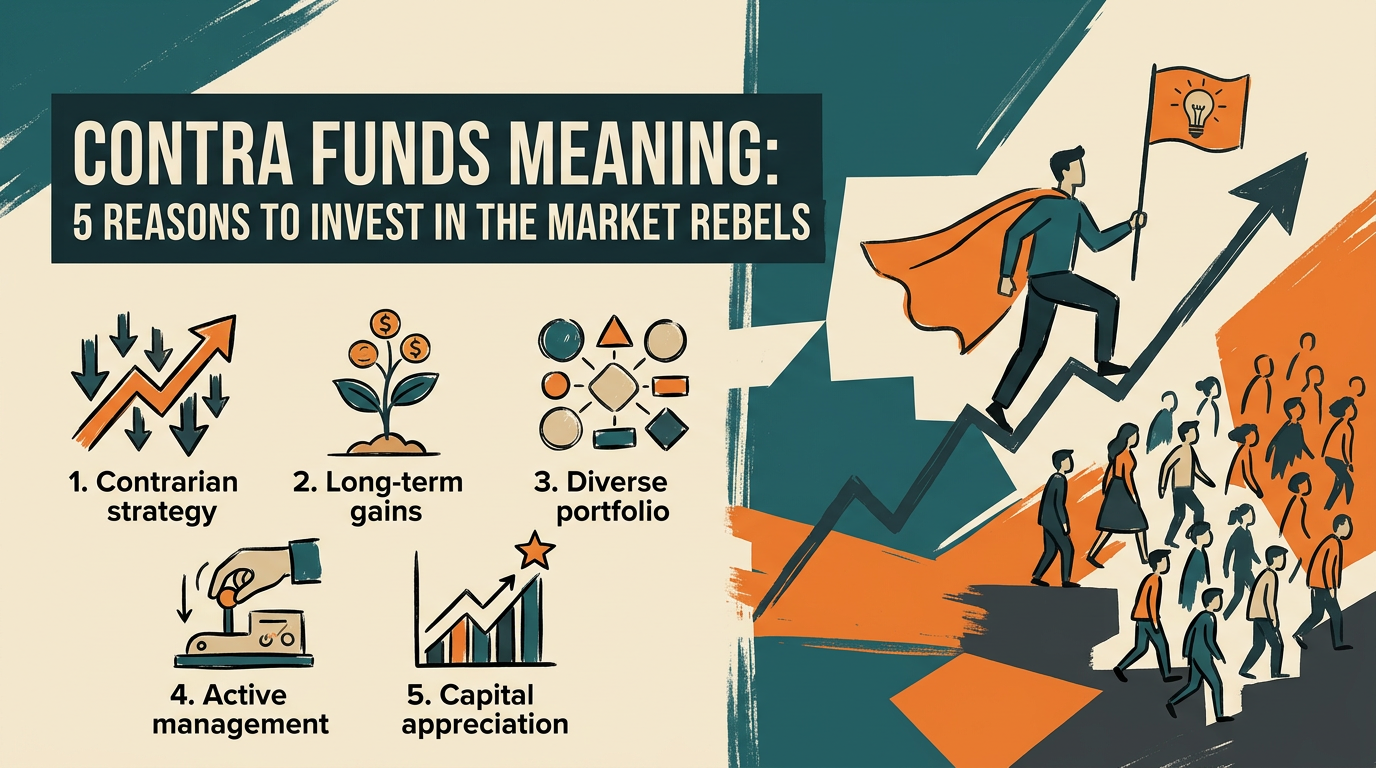
In the complex world of mutual funds, investors often flock to the latest market darlings. However, savvy investors look for hidden gems in the shadows. This is where understanding contra funds meaning becomes essential for your portfolio strategy.
A contra fund is a specialized equity mutual fund that follows a contrarian investment philosophy. Instead of chasing high-growth stocks, these funds invest in companies that are currently out of favor with the market. The goal is to buy these undervalued assets and wait for a turnaround.
When you explore contra funds meaning, you realize it is essentially betting against the herd. It requires patience, conviction, and a long-term horizon. If you are looking to master your money management skills, these funds can be a powerful tool for diversification.
Why Investors Choose Contra Funds
The primary appeal of these funds lies in the potential for significant alpha. When the market sentiment shifts, these “unpopular” stocks often see a dramatic recovery. This is the core of contra funds meaning in a practical sense.
By investing in companies with strong fundamentals that are temporarily undervalued, fund managers aim to beat market benchmarks. It is a high-conviction approach that rewards those who can look past short-term volatility.
1. Capitalizing on Market Irrationality
Markets are not always efficient. Sometimes, investors overreact to negative news, causing stock prices to plummet below their intrinsic value. This is the perfect environment for a contra fund manager to enter.
By purchasing these stocks at a discount, the fund positions itself for substantial gains once the market corrects itself. Understanding contra funds meaning helps you identify these opportunities before the rest of the market catches on.
2. Diversification Beyond Growth Stocks
Most portfolios are heavily tilted toward growth stocks. Adding a contra fund provides a hedge against the cyclical nature of growth investing. It balances your risk profile effectively.
Even if growth stocks underperform, your contra fund might thrive as the market rotates toward value. This is a fundamental pillar of sound financial planning as outlined by the Reserve Bank of India.
3. Long-Term Wealth Creation Potential
Contra funds are not for the faint of heart. They require a long-term perspective, often spanning 5 to 7 years. The turnaround of a company does not happen overnight.
However, the rewards for this patience can be immense. When you grasp the true contra funds meaning, you stop viewing temporary price drops as losses and start seeing them as entry points for future growth.
4. Active Management Expertise
These funds rely heavily on the skill of the fund manager. They must perform deep fundamental research to distinguish between a company that is dying and one that is simply misunderstood.
The manager must have the courage to go against the consensus. This active management is a key component of contra funds meaning, as it distinguishes these funds from passive index funds.
5. Potential for Market-Beating Returns
Because these funds buy low, the upside potential is often higher than traditional equity funds. When the market eventually recognizes the value of these companies, the price appreciation can be rapid.
Investors who understand contra funds meaning are often willing to accept higher short-term volatility for the chance of achieving superior long-term returns compared to the broader market index.
Risks and Considerations
While the potential is high, contra funds come with inherent risks. The “unpopular” companies you invest in might stay unpopular for a long time, or worse, their business models might be failing.
Always assess your risk tolerance before allocating a portion of your ₹10,000 or ₹1,00,000 investment into these funds. They should ideally form a small satellite portion of your overall portfolio.
Conclusion
In summary, contra funds meaning revolves around the contrarian philosophy of buying low and selling high. It is a strategy for the patient, disciplined investor who understands that market sentiment is often wrong.
By incorporating these funds into your strategy, you can potentially enhance your portfolio’s performance. Always conduct thorough research or consult a financial advisor before making any investment decisions.