
Navigating the world of taxation often feels like learning a foreign language. However, mastering ITR filing basics for beginners is surprisingly straightforward once you break down the jargon. Many taxpayers view the process as a daunting chore, but it is actually simpler than ordering food online if you understand the core concepts.
In India, the Reserve Bank of India and the Income Tax Department have streamlined digital processes significantly. Whether you are a salaried employee or a freelancer, understanding your obligations is the first step toward effective money management.
Understanding the Importance of ITR Filing
Filing your Income Tax Return (ITR) is not just a legal mandate; it is a vital financial habit. It serves as proof of income, which is essential for securing loans, obtaining visas, or claiming tax refunds. When you learn the ITR filing basics for beginners, you gain control over your financial footprint.
1. Demystifying ITR-1: The Sahaj Form
The ITR-1 form, also known as Sahaj, is designed for simplicity. It is intended for individuals having income from salary, one house property, and other sources like interest. If your total income does not exceed ₹50 Lakhs, this is likely your go-to form.
Understanding ITR filing basics for beginners starts with recognizing that ITR-1 is the most common form used by salaried professionals. It requires minimal documentation, making the process quick and efficient. You simply verify your pre-filled data against your Form 16.
2. Decoding ITR-2: For More Complex Income Streams
If your financial life involves more than just a salary, you will likely need to file ITR-2. This form is for individuals who do not have income from a business or profession but have capital gains or multiple house properties. It is a step up from ITR-1 in terms of detail.
Many people find ITR filing basics for beginners intimidating when they encounter ITR-2. However, it is essentially just a structured way to report diverse income sources. If you have sold stocks or mutual funds, this is the form that captures those transactions.
3. Why Filing Taxes is Easier Than You Think
Think about the last time you ordered food online. You selected your items, confirmed your address, and hit pay. Filing taxes follows a similar digital flow. The Income Tax portal now provides pre-filled forms that pull data directly from your PAN and bank accounts.
By applying ITR filing basics for beginners, you can complete your filing in under 30 minutes. The government has invested heavily in user-friendly interfaces to ensure that compliance is accessible to everyone. You no longer need a mountain of paperwork to get the job done.
4. Essential Documents You Need to Gather
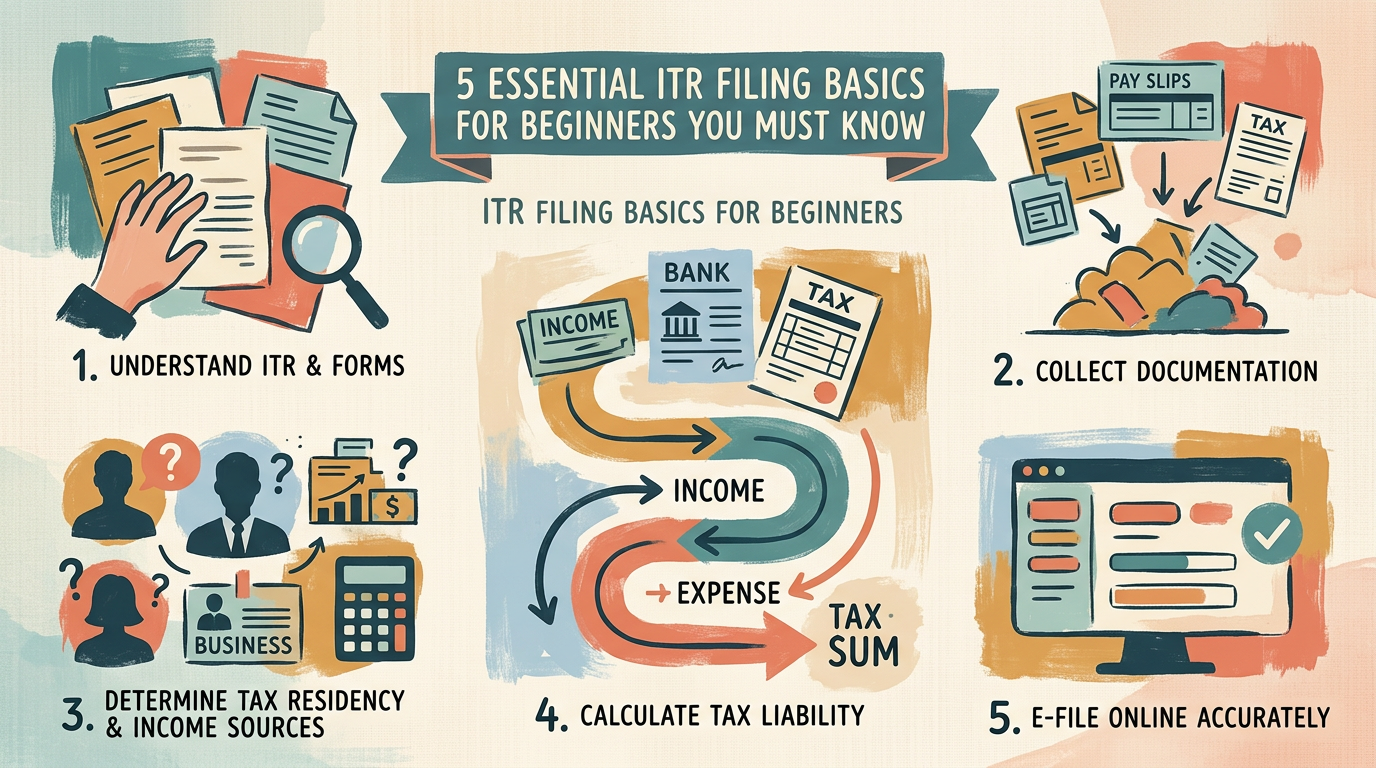
Preparation is the secret to a stress-free tax season. Before you log in, ensure you have your PAN card, Aadhaar card, and Form 16 ready. These documents contain the ITR filing basics for beginners that you need to input into the portal.
Additionally, keep your bank statements and investment proofs handy. If you have made investments under Section 80C, such as ELSS or PPF, these will help reduce your taxable income. Having these documents organized makes the actual filing process seamless.
5. Avoiding Common Mistakes During Filing
Even with a simple process, errors can happen. The most common mistake is failing to report interest income from savings accounts. Remember, every rupee earned is taxable, and transparency is key to avoiding notices from the tax department.
Another aspect of ITR filing basics for beginners is verifying your return. Filing is not complete until you e-verify it using an Aadhaar OTP or net banking. Skipping this step is a frequent oversight that can lead to unnecessary delays in processing your refund.
Final Thoughts on Tax Compliance
Mastering ITR filing basics for beginners empowers you to handle your finances with confidence. By distinguishing between ITR-1 and ITR-2, you can choose the right path for your specific situation. Remember, the goal is to be compliant, transparent, and proactive.
As you continue your journey toward financial literacy, keep these ITR filing basics for beginners in mind. Tax filing is a recurring responsibility, and the more you practice, the easier it becomes. Stay informed, stay organized, and take charge of your financial future today.
For those who are just starting, remember that ITR filing basics for beginners are not meant to be a barrier. They are tools designed to help you contribute to the nation while securing your own financial stability. Start early, gather your documents, and enjoy the peace of mind that comes with being a responsible taxpayer.