
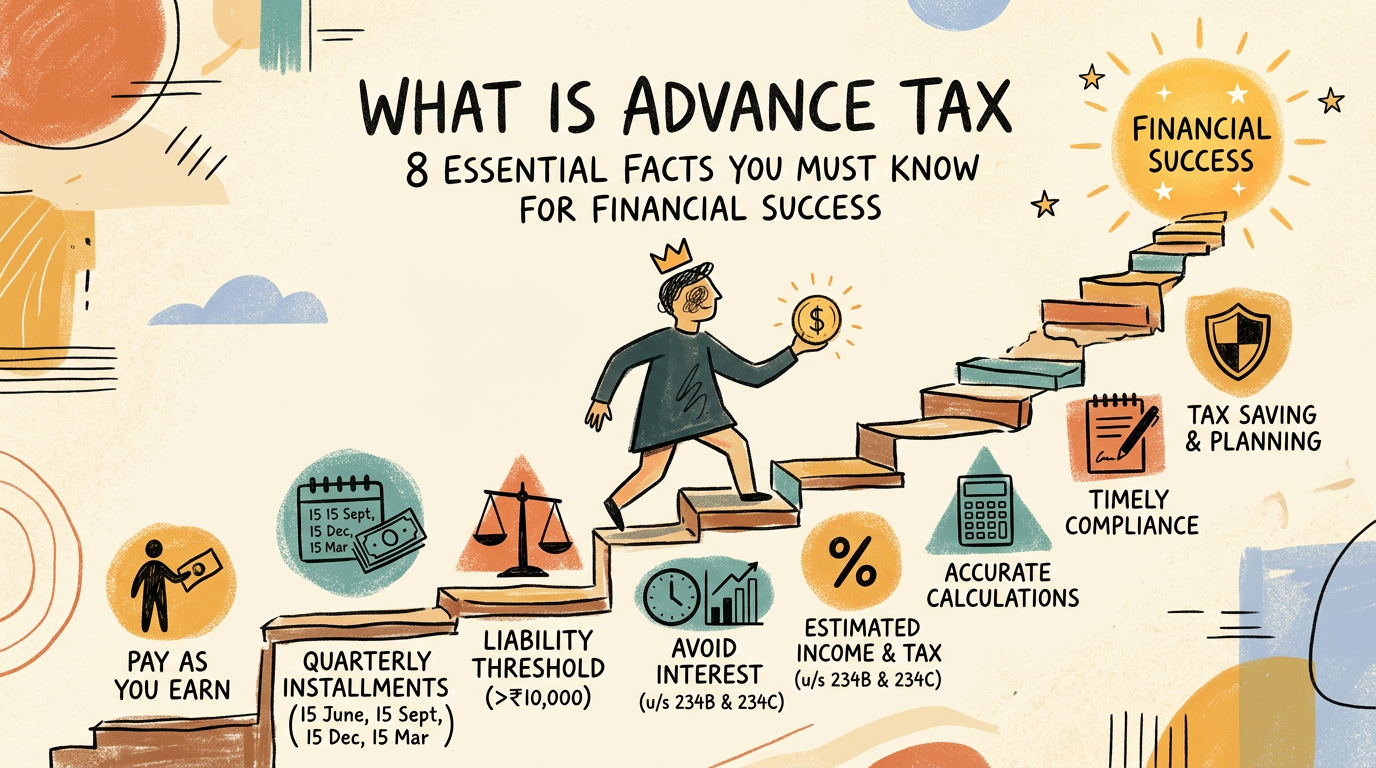
Navigating the complexities of the Indian tax system can be daunting, especially when you are not a salaried employee. Many taxpayers often find themselves asking, what is advance tax, and why does it feel like the government is in such a hurry to collect dues?
In simple terms, the government operates on a “pay-as-you-earn” principle. Instead of waiting for you to file your annual returns, they require you to pay tax in installments throughout the financial year. This ensures a steady flow of revenue for the Reserve Bank of India and the national treasury.
Understanding the Concept of Advance Tax
If you earn income from sources other than a salary, such as business profits, capital gains, or rental income, you are likely liable for advance tax. The core idea is to prevent a massive financial burden at the end of the year and to help you maintain better money management habits.
1. Why the Government Mandates Advance Tax
The government does not want to wait until the end of the year to collect its share because national development projects require continuous funding. By collecting what is advance tax payments quarterly, the state avoids liquidity crunches.
This system also helps taxpayers avoid the shock of a lump-sum payment. If your tax liability exceeds ₹10,000 in a financial year, you are legally required to pay it in advance.
2. Who Must Pay Advance Tax?
Any individual, freelancer, or business owner whose estimated tax liability for the year is ₹10,000 or more must comply. If you are a senior citizen without business income, you are exempt from this requirement.
Understanding what is advance tax is crucial for professionals who do not have TDS deducted by an employer. Failing to pay on time can lead to interest penalties under sections 234B and 234C of the Income Tax Act.
3. The Quarterly Payment Deadlines
The government has structured the payment schedule to align with the fiscal year. You must pay your dues in four specific installments to avoid interest.
- June 15: 15% of the total tax liability.
- September 15: 45% of the total tax liability.
- December 15: 75% of the total tax liability.
- March 15: 100% of the total tax liability.
Knowing what is advance tax and these dates is the first step toward financial compliance.
4. How to Calculate Your Liability
Calculating your liability involves estimating your total annual income from all sources. You then subtract your eligible deductions and investments under Chapter VI-A.
Once you arrive at your net taxable income, apply the applicable tax slab rates. If the resulting figure is over ₹10,000, you must pay what is advance tax installments based on that estimate.
5. Consequences of Missing Deadlines
If you fail to pay the required percentage by the due dates, you will be charged interest. This is a common pitfall for many self-employed individuals.
The interest is calculated on the shortfall of the tax amount. Mastering what is advance tax rules will save you from unnecessary financial penalties that eat into your hard-earned profits.
6. The Presumptive Taxation Benefit
If you are a small business owner or professional, you might opt for the presumptive taxation scheme. Under this, you declare a fixed percentage of your gross receipts as income.
If you choose this route, you are only required to pay the full what is advance tax amount by March 15. This simplifies the process significantly compared to the standard quarterly requirements.
7. How to Pay Advance Tax Online
Paying your dues is now easier than ever through the e-filing portal. You can use net banking, debit cards, or NEFT/RTGS to settle your payments.
Always keep your challan receipt safe. When you finally file your ITR, you will need to mention these payments to ensure you are not taxed twice on the same income. This is the practical application of what is advance tax.
8. Final Tips for Tax Compliance
Always review your income estimates periodically. If your income increases mid-year, adjust your remaining installments accordingly.
By staying proactive, you ensure that you are never caught off guard by the tax department. Understanding what is advance tax is ultimately about taking control of your financial destiny and ensuring you remain on the right side of the law.
In summary, what is advance tax? It is a strategic tool for both the government and the taxpayer to manage cash flow effectively throughout the year. By paying in installments, you ensure compliance and peace of mind.