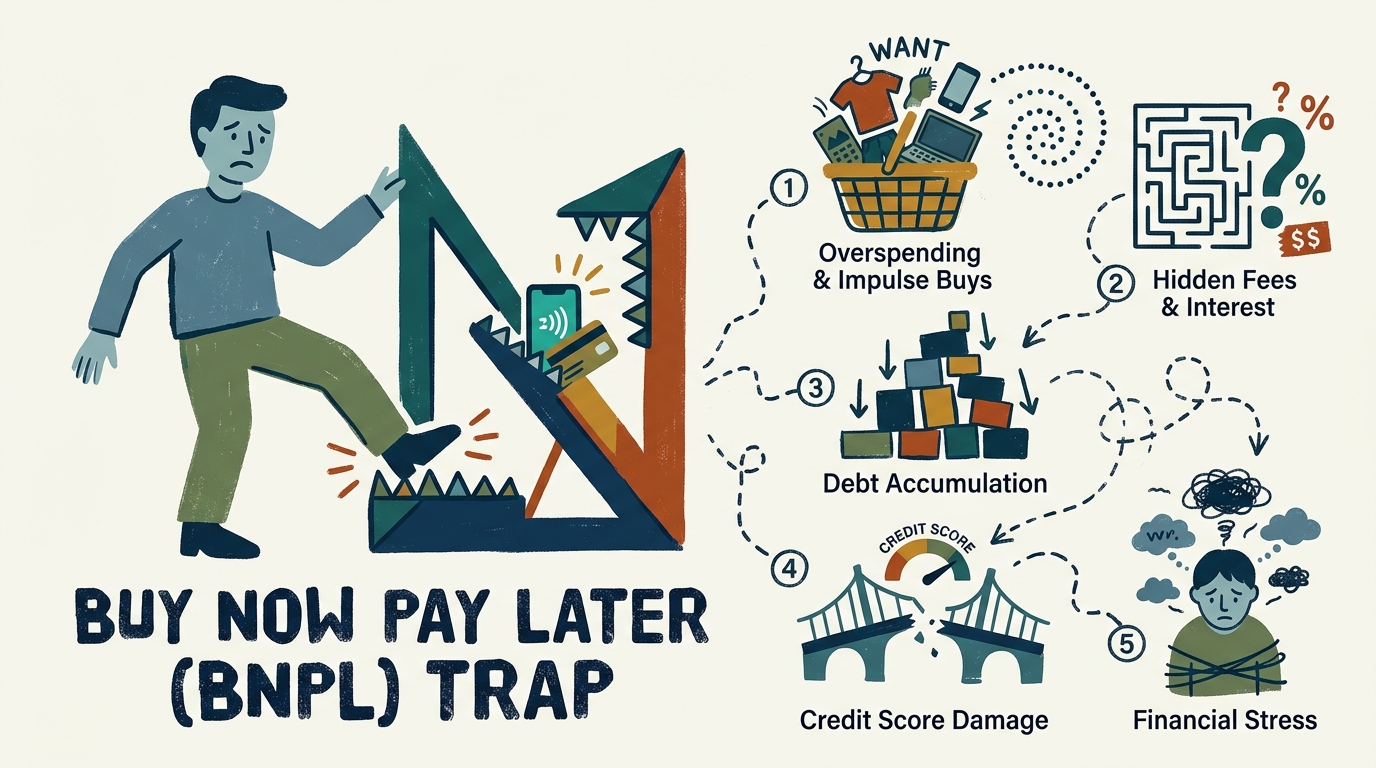
In the digital age, financial convenience is just a click away. You see a pair of shoes or a meal for ₹500, and a sleek button invites you to Buy Now Pay Later (BNPL) trap. It feels like a harmless shortcut, but it is often the beginning of a slippery slope toward financial instability.
Understanding how these services function is essential for anyone interested in money management. While they promise ease, they often mask the reality of high-interest debt.
Understanding the Mechanics of BNPL
At its core, BNPL is a form of short-term financing. It allows consumers to split payments or defer them entirely. However, treating these services as free money is a dangerous mistake.
Many users fall into the Buy Now Pay Later (BNPL) trap because the lack of upfront cost makes them lose track of their total spending. When you aggregate dozens of small transactions, you are essentially living beyond your means.
1. The Illusion of Interest-Free Spending
Marketing campaigns often highlight “zero interest” offers. While technically true for the initial period, the Buy Now Pay Later (BNPL) trap springs shut when you miss a single payment deadline. Late fees and interest rates can quickly exceed those of traditional credit cards.
If you fail to pay, the provider may charge exorbitant penalties. These costs can turn a ₹500 purchase into a significant financial burden. Always read the fine print before clicking that button.
2. The Hidden Impact on Your CIBIL Score
Many consumers mistakenly believe that BNPL services do not affect their credit history. This is a myth. Every transaction is reported to credit bureaus, and the Buy Now Pay Later (BNPL) trap can severely damage your CIBIL score.
Multiple active BNPL accounts create a complex credit profile. If you default on even a small amount, your creditworthiness drops. This makes it harder to secure home loans or car loans in the future.
3. Psychological Triggers of Micro-Debt
The design of these apps is meant to bypass your natural resistance to spending. By removing the immediate pain of paying, the Buy Now Pay Later (BNPL) trap encourages impulsive buying behavior.
You are not just buying a product; you are buying a future obligation. When you have five different payments due at the end of the month, the stress of managing that debt can be overwhelming.
4. Regulatory Oversight and Consumer Protection
The financial landscape is evolving, and regulators are taking notice. The Reserve Bank of India has been tightening norms to ensure that digital lending platforms operate transparently.
Despite these regulations, the Buy Now Pay Later (BNPL) trap remains a concern. Consumers must take personal responsibility for their financial health. Do not rely on apps to protect you from your own spending habits.
5. Breaking Free from the Debt Cycle
Escaping the Buy Now Pay Later (BNPL) trap requires a shift in mindset. Start by tracking every small expense. If you cannot afford to pay for it with cash today, you cannot afford it on credit.
Consolidate your existing debts and pay them off systematically. By avoiding the Buy Now Pay Later (BNPL) trap, you regain control over your financial future. Remember, true wealth is built through discipline, not through deferred payments.
Ultimately, the Buy Now Pay Later (BNPL) trap is a test of your financial maturity. Stay informed, stay cautious, and prioritize your long-term stability over short-term gratification.