
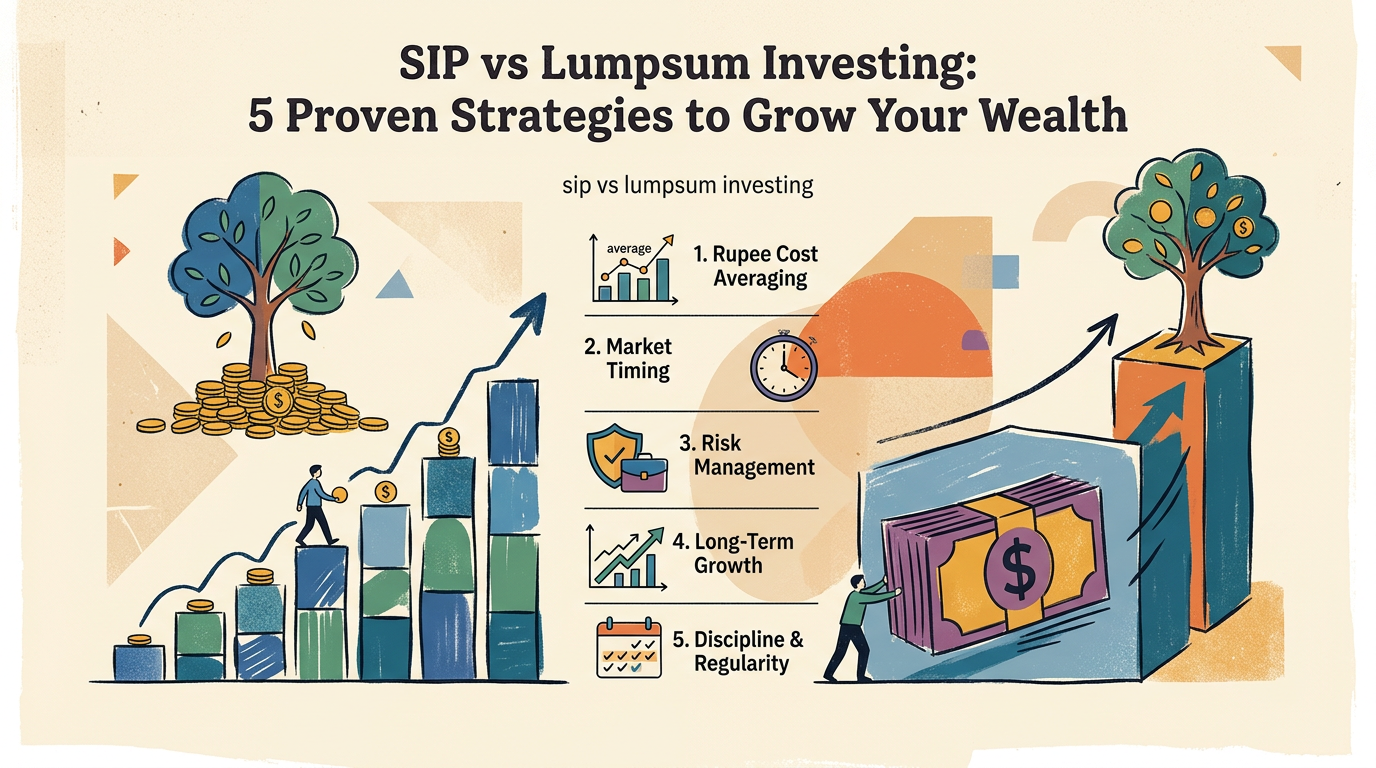
When it comes to building wealth, investors often find themselves at a crossroads: should they invest small amounts regularly or go all-in at once? Understanding sip vs lumpsum investing is essential for anyone looking to master their financial future.
Think of sip vs lumpsum investing like filling a glass with water. A Systematic Investment Plan (SIP) is like pouring water slowly and steadily, ensuring every drop counts. A lumpsum investment is like throwing a bucket of water at the glass; it is fast, powerful, and requires perfect aim.
Both strategies have their place in a robust money management plan. Choosing the right one depends on your cash flow, risk appetite, and market conditions.
Understanding the Core Differences
To make an informed decision regarding sip vs lumpsum investing, you must first understand the mechanics of each. SIPs allow you to invest a fixed amount, say ₹5,000, every month. This strategy leverages rupee cost averaging, which reduces the impact of market volatility.
Conversely, a lumpsum investment involves deploying a large capital amount, such as ₹5,00,000, into a mutual fund in a single transaction. This is often used by investors who have received a bonus, inheritance, or have accumulated savings over time.
1. The Power of Rupee Cost Averaging in SIPs
The primary advantage of SIPs is that you buy more units when the market is down and fewer units when the market is high. This naturally lowers your average purchase cost over the long term.
By automating your investments, you remove the emotional stress of timing the market. For most retail investors, this disciplined approach is the safest way to build a corpus of ₹10 Lakhs or more without needing to watch the ticker every day.
2. The Potential for Higher Returns with Lumpsum
If you have a large sum of money sitting in a savings account earning 3%, you are losing value to inflation. Investing that money as a lumpsum allows your entire capital to participate in market growth from day one.
Historically, if the market trends upward over a long period, a lumpsum investment often outperforms a SIP because the money stays invested for longer. However, this carries the risk of entering the market at a peak.
3. Managing Risk and Volatility
When comparing sip vs lumpsum investing, risk management is the deciding factor. SIPs are inherently safer because they spread your risk across different market cycles.
Lumpsum investing requires a higher risk tolerance. If you invest a large amount right before a market correction, your portfolio value will drop significantly in the short term. Always consult the Securities and Exchange Board of India guidelines to understand fund risks.
4. Suitability for Different Financial Goals
SIPs are ideal for long-term goals like retirement or children’s education, where you are building wealth from your monthly salary. They instill financial discipline.
Lumpsum investments are better suited for investors with a significant surplus who want to maximize their capital growth. If you have a windfall, putting it to work immediately is often better than holding it in cash.
5. The Hybrid Approach: STP
Many investors struggle to choose between sip vs lumpsum investing. A popular solution is the Systematic Transfer Plan (STP). You invest your lumpsum in a liquid fund and systematically transfer a fixed amount into an equity fund.
This gives you the benefit of keeping your money in a relatively safe instrument while still enjoying the benefits of averaging your entry into equity markets. It is the perfect middle ground for those who are risk-averse.
Final Verdict on SIP vs Lumpsum Investing
Ultimately, the debate over sip vs lumpsum investing is not about which is better, but which fits your current financial situation. If you are a salaried individual, SIP is your best friend. If you have a large inheritance, a lumpsum might be more efficient.
Regardless of your choice, the key to success is consistency. Whether you pour slowly or throw the bucket, the goal is to fill the glass of wealth. Start today, stay disciplined, and watch your investments grow.