

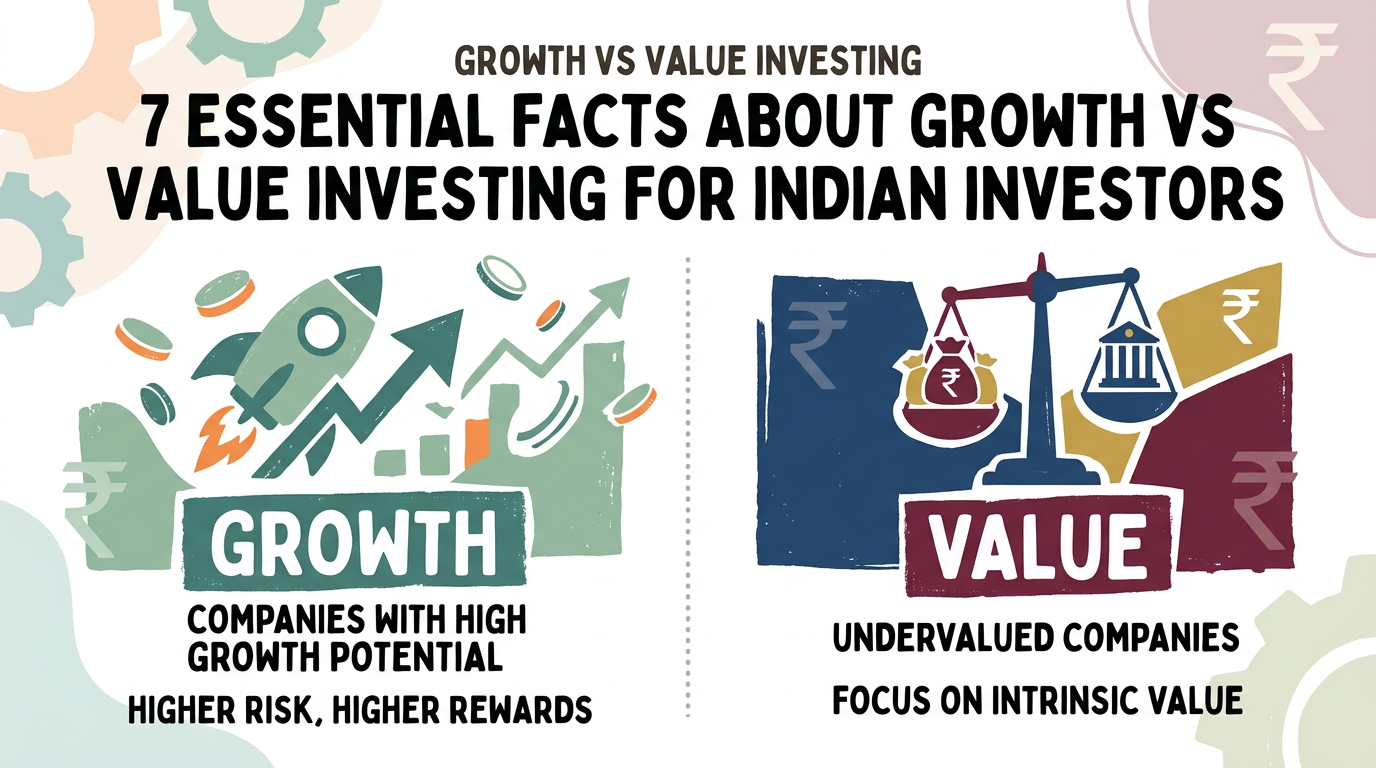
In the world of stock market investing, two philosophies dominate the conversation: growth vs value investing. While both aim to build wealth, they approach the market with fundamentally different mindsets. Think of it this way: growth investing is like planting a seed and nurturing it, expecting a towering tree in the future. Conversely, value investing is akin to finding a slightly bruised apple that is perfectly healthy inside, but available at a 50% discount.
Understanding these strategies is crucial for any Indian investor looking to navigate the volatile markets. Whether you are a beginner or a seasoned pro, knowing which path aligns with your financial goals can make all the difference in your portfolio’s performance.
1. The Core Philosophy of Growth Investing
Growth investing focuses on companies that are expected to grow at an above-average rate compared to their industry or the broader market. These companies often reinvest their earnings into research, development, or expansion rather than paying dividends to shareholders.
Investors in this category are willing to pay a premium for stocks today because they believe the future earnings will justify the high valuation. It is a high-reward, high-risk strategy that requires patience and a long-term horizon.
2. The Strategic Approach of Value Investing
Value investing involves picking stocks that appear to be trading for less than their intrinsic or book value. The goal is to find “bargains” that the market has temporarily overlooked or undervalued due to negative sentiment or short-term headwinds.
As championed by legends like Benjamin Graham, this strategy relies on the belief that the market will eventually correct itself. When the price rises to reflect the company’s true worth, the investor reaps the profit.
3. Comparing Growth vs Value Investing: Key Differences
To better understand growth vs value investing, let’s look at how they differ in practice. The following table breaks down the essential contrasts:
| Feature | Growth Investing | Value Investing |
|---|---|---|
| Primary Goal | Capital Appreciation | Buying Undervalued Assets |
| Valuation | High P/E Ratios | Low P/E Ratios |
| Dividends | Rarely Paid | Often Paid |
| Risk Level | Higher Volatility | Lower Volatility |
4. Why Growth vs Value Investing Matters for Your Portfolio
Deciding between these two styles is not just about preference; it is about your risk appetite. If you are young and have a long time to stay invested, you might lean towards growth. If you prefer stability and income, value might be your calling.
However, many successful investors practice a hybrid approach. By balancing your portfolio, you can mitigate risks associated with market cycles. Always ensure your investments are aligned with the guidelines set by the SEBI to protect your interests.
5. How to Analyze Growth vs Value Investing Metrics
When evaluating stocks, you must look at specific financial metrics. For growth stocks, focus on revenue growth rates and profit margins. For value stocks, look at the Price-to-Earnings (P/E) ratio and Price-to-Book (P/B) ratio.
- Growth Metrics: Look for consistent double-digit revenue growth.
- Value Metrics: Look for a P/E ratio significantly lower than the industry average.
- Dividends: Check if the company has a history of consistent payouts.
6. The Role of Market Cycles in Growth vs Value Investing
Market conditions dictate which strategy performs better. In a bull market, growth investing often outperforms as optimism drives high-growth tech and consumer stocks upward. In a bear market or economic downturn, value investing tends to be more resilient, as investors flock to stable, profitable companies.
Understanding these cycles is part of our investment basics guide. By staying informed, you can adjust your allocation to capitalize on market shifts.
7. Risks Associated with Growth vs Value Investing
Every strategy has its pitfalls. Growth stocks can crash hard if they fail to meet high expectations. Value stocks can become “value traps”—companies that remain cheap because they are fundamentally declining.
Always conduct thorough research before investing your hard-earned ₹10,000 or ₹1,00,000. Diversification remains the best defense against the inherent risks of both growth vs value investing.
Ultimately, the debate of growth vs value investing is not about finding a winner, but finding what works for you. Whether you choose the seed or the bruised apple, consistency and discipline are the keys to long-term wealth creation.