
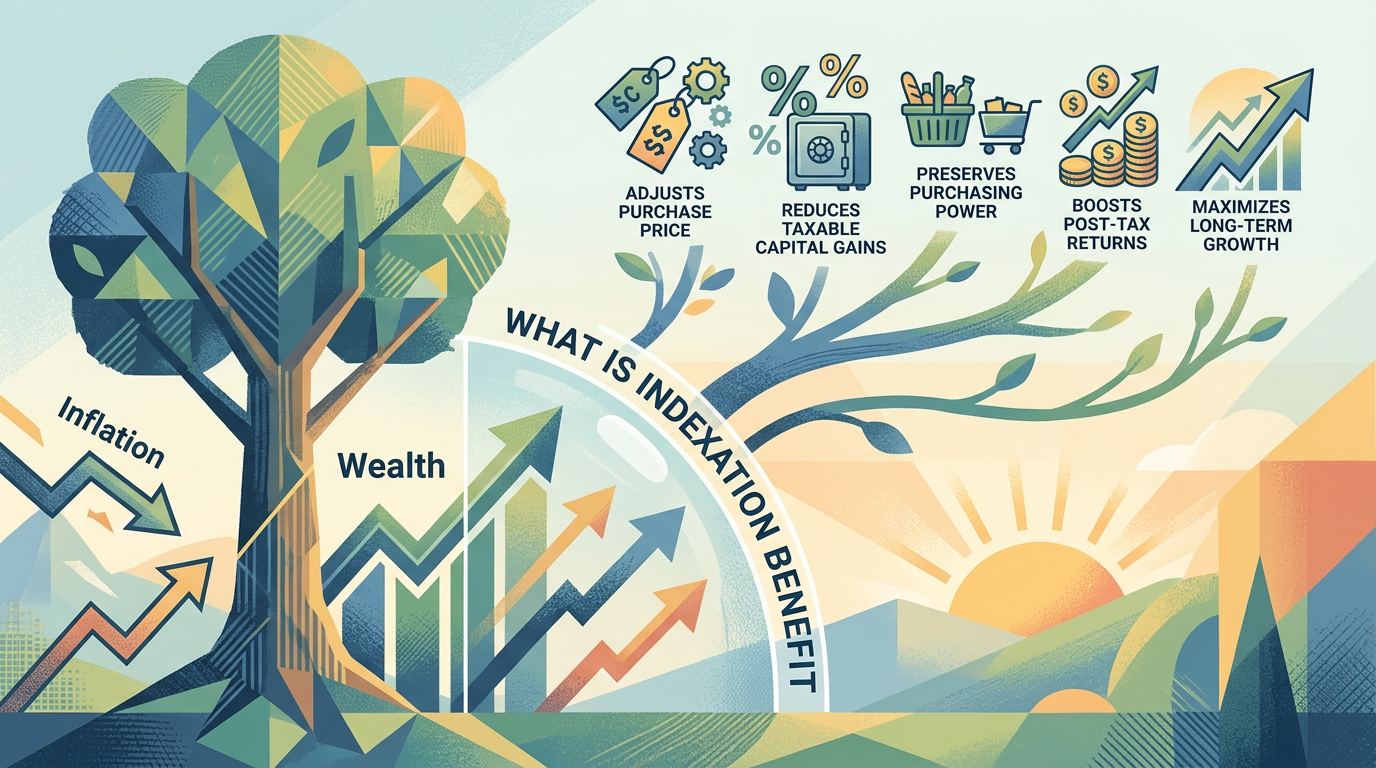
When you invest in assets like real estate or gold, you are playing a long-term game. However, inflation often erodes the real value of your gains over time. Understanding what is indexation benefit is crucial for any investor looking to protect their wealth from unnecessary tax burdens.
In simple terms, the government recognizes that a rupee today is not worth the same as a rupee ten years ago. Therefore, they allow you to adjust your purchase price to account for inflation. This process is known as indexation, and it significantly lowers your taxable capital gains.
The Concept of Indexation Explained
To master your money management strategy, you must understand how the tax department views your profits. Without indexation, you would pay tax on the absolute difference between your selling price and your original purchase price. This would be unfair because a large portion of that “profit” is merely a result of inflation.
The what is indexation benefit mechanism uses the Cost Inflation Index (CII) notified by the government. By applying this index, you arrive at the ‘indexed cost of acquisition.’ This higher cost basis reduces your taxable profit, ensuring you only pay tax on your real economic gain.
1. How the Cost Inflation Index (CII) Works
The CII is a number that represents the rise in inflation over the years. The government updates this index annually. When calculating your tax, you multiply your original purchase price by the ratio of the CII of the year of sale to the CII of the year of purchase.
This mathematical adjustment is the core of what is indexation benefit. By increasing your cost basis, the government effectively shields a portion of your investment returns from being classified as taxable income.
2. Calculating Your Tax Savings
Imagine you bought a plot of land for ₹10,00,000 ten years ago and sold it today for ₹30,00,000. Without indexation, you would pay tax on a profit of ₹20,00,000. However, with indexation, your purchase price is adjusted upwards based on the CII.
If the indexed cost of acquisition becomes ₹18,00,000, your taxable gain drops to only ₹12,00,000. This is the primary reason why investors ask what is indexation benefit; it directly translates into significant savings in your tax outflow.
3. Assets Eligible for Indexation
Not all investments qualify for this tax shield. Generally, long-term capital assets like physical gold, real estate, and unlisted shares are eligible. It is vital to consult the official guidelines provided by the Reserve Bank of India or the Income Tax Department to confirm eligibility.
Knowing what is indexation benefit helps you categorize your portfolio correctly. By focusing on assets that allow for indexation, you can optimize your long-term tax liability effectively.
4. The Impact of Holding Periods
Indexation is only available for long-term capital assets. The holding period required to qualify as ‘long-term’ varies by asset class. For instance, real estate usually requires a holding period of more than 24 months.
If you sell before this period, you pay short-term capital gains tax at your slab rate. Therefore, understanding what is indexation benefit also encourages disciplined, long-term investing behavior.
5. Why Indexation is Your Inflation Shield
Inflation is the silent killer of wealth. If your asset value grows at 5% but inflation is 6%, you are technically losing purchasing power. What is indexation benefit acts as a buffer, ensuring that the taxman does not penalize you for the inflationary growth of your assets.
It is a sophisticated tool designed to ensure tax equity. By utilizing this, you keep more of your hard-earned money, allowing for better compounding over the long run.
Conclusion: Mastering Tax Efficiency
Understanding what is indexation benefit is a hallmark of a savvy investor. It transforms how you look at your investment returns and tax obligations. By leveraging this provision, you can significantly reduce your tax liability on long-term investments.
Always keep your purchase documents safe, as they are essential for calculating your indexed cost. For more insights on optimizing your finances, keep exploring our guides on tax planning and wealth creation.
Ultimately, what is indexation benefit is about fairness. It ensures that you are taxed on your actual growth, not just the inflationary increase in asset prices. Use this knowledge to build a more robust and tax-efficient financial future.