
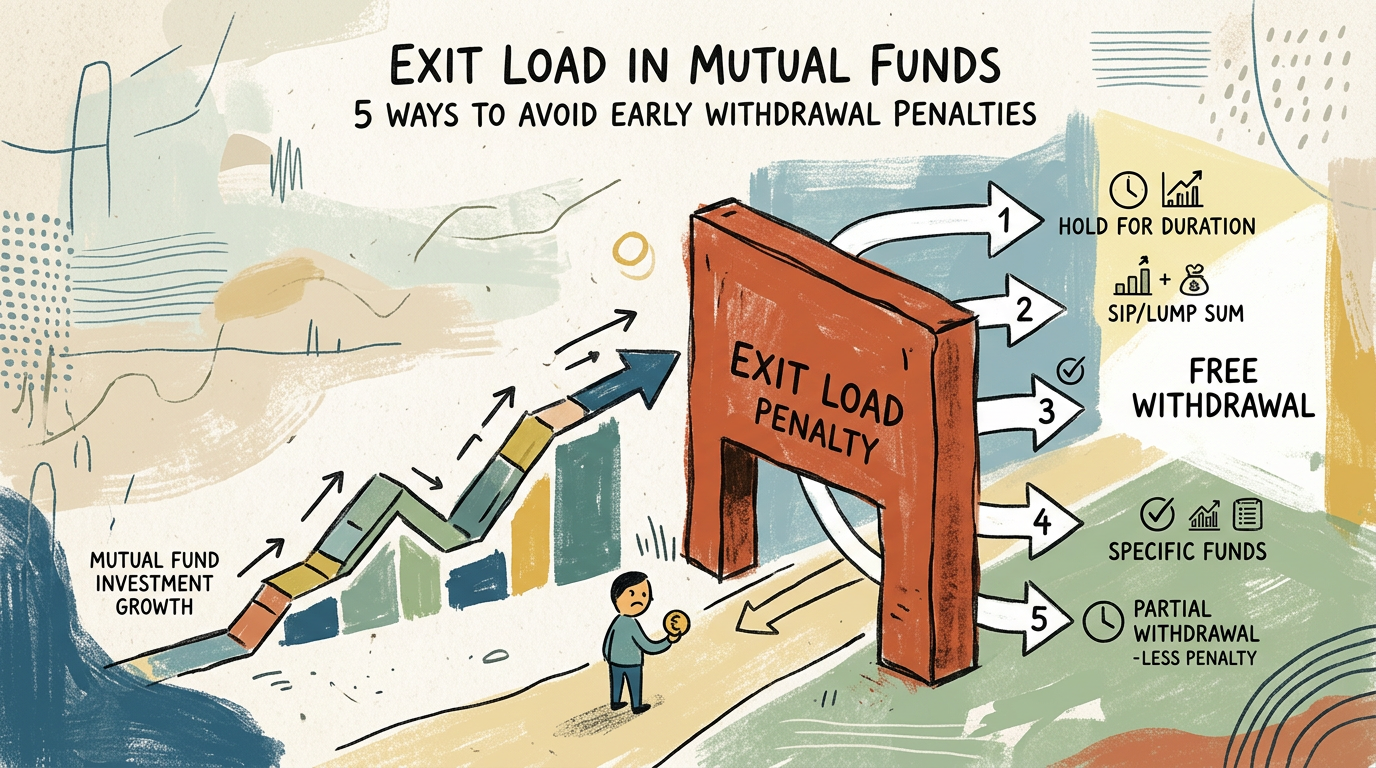
Investing in mutual funds is a cornerstone of building long-term wealth. However, many investors are caught off guard when they see a deduction from their redemption amount. This is known as the exit load in mutual funds.
Understanding this fee is crucial for effective money management. If you do not plan your withdrawals correctly, you could lose a significant portion of your returns to these penalties.
What Exactly is Exit Load in Mutual Funds?
An exit load in mutual funds is a fee charged by an Asset Management Company (AMC) when an investor redeems their units before a specified period. Think of it as an early withdrawal penalty designed to discourage short-term trading.
The primary purpose is to protect long-term investors. When many people pull their money out suddenly, the fund manager is forced to sell underlying securities at potentially unfavorable prices, which hurts the fund’s overall performance.
1. Why AMCs Impose an Exit Load in Mutual Funds
The primary reason for an exit load in mutual funds is to ensure stability. Fund managers build portfolios based on long-term investment horizons. Frequent redemptions disrupt this strategy.
By charging a fee, the AMC discourages investors from treating a long-term equity fund like a savings account. It stabilizes the fund’s corpus, allowing the manager to focus on growth rather than liquidity management.
2. How the Exit Load in Mutual Funds is Calculated
The exit load in mutual funds is typically expressed as a percentage of the Net Asset Value (NAV). For instance, if a fund has a 1% exit load and you redeem units worth ₹1,00,000, you will be charged ₹1,000.
This amount is deducted from the redemption proceeds. The remaining balance is then credited to your bank account. Always check the Scheme Information Document (SID) to understand the specific structure for your fund.
3. Understanding the Time Horizon for Penalties
Every fund has a specific “lock-in” or exit load period. For example, a fund might charge 1% if you exit within 12 months. After 12 months, the exit load in mutual funds usually drops to zero.
It is vital to track your investment dates. Redeeming even one day before the completion of the period can trigger the penalty. You can verify these details on the Securities and Exchange Board of India website.
4. Strategies to Avoid Exit Load in Mutual Funds
The simplest way to avoid an exit load in mutual funds is to align your investment duration with your financial goals. If you need money in six months, do not invest in an equity fund with a one-year exit load.
- Use liquid funds for short-term parking.
- Check if the fund offers a “no exit load” period for specific redemptions.
- Use Systematic Withdrawal Plans (SWP) if the fund allows penalty-free withdrawals.
5. When is Exit Load in Mutual Funds Not Applicable?
There are specific scenarios where you might not pay an exit load in mutual funds. Many AMCs allow a free withdrawal of up to 10% of your investment units in a year.
Additionally, some funds waive the exit load during extreme market conditions or if the fund is being merged. Always read the latest updates from your AMC to stay informed about potential waivers.
In conclusion, while the exit load in mutual funds might seem like a nuisance, it serves a functional purpose in the financial ecosystem. By planning your investments carefully, you can avoid these unnecessary costs and keep more of your hard-earned money working for you.