
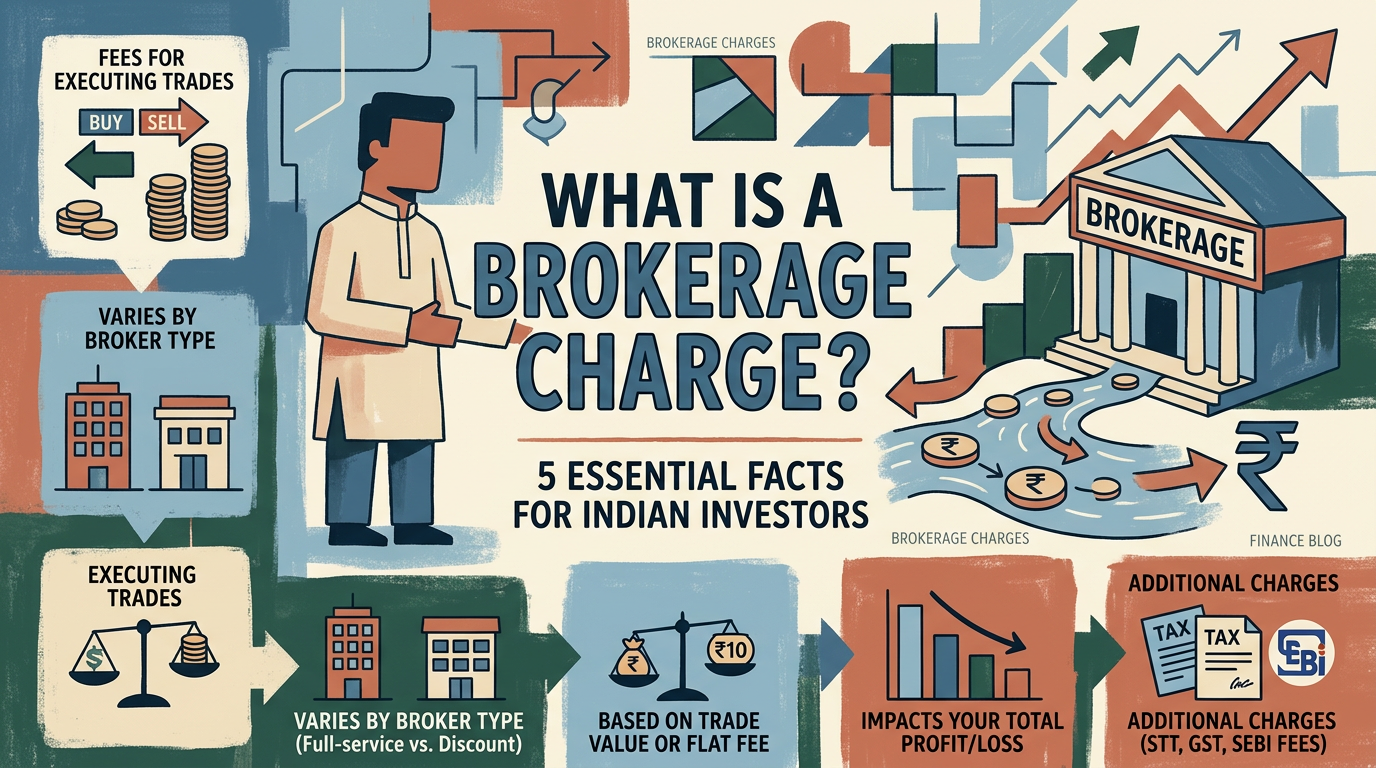
Entering the stock market feels like embarking on a long journey toward financial freedom. However, just like driving on a highway requires paying a toll, trading stocks requires paying a fee to your broker. If you have ever wondered what is a brokerage charge, you are not alone.
Many new investors overlook these costs, which can significantly impact their net returns over time. Understanding these expenses is a fundamental part of money management for every serious investor.
The Hidden Toll of Stock Trading
Think of your broker as the infrastructure provider. They give you the platform, the technology, and the regulatory access to buy and sell shares. In exchange, they levy a fee, which is the answer to the question, what is a brokerage charge.
This fee is not a flat rate across the board. It varies based on the broker type, your trading volume, and the specific financial instruments you choose to trade.
1. Understanding Fixed Brokerage Plans
Some brokers offer a fixed fee structure. Regardless of whether you trade shares worth ₹10,000 or ₹10,00,000, you pay a set amount per executed order. This is highly beneficial for high-volume traders who execute large transactions.
If you are a beginner, knowing what is a brokerage charge under a fixed plan helps you predict your monthly costs. It removes the uncertainty of percentage-based calculations.
2. Decoding Percentage-Based Brokerage
Traditional full-service brokers often charge a percentage of your total trade value. For example, if they charge 0.5% and you buy shares worth ₹1,00,000, you pay ₹500 as brokerage.
This model can become expensive as your capital grows. When evaluating what is a brokerage charge in this context, always calculate the impact on your profit margins.
3. The Role of Regulatory Levies
Brokerage is not the only cost you pay. You must also account for Securities Transaction Tax (STT), Exchange Transaction Charges, and GST. These are mandatory government levies.
While the broker collects these, they are not part of their revenue. To learn more about how these regulations work, you can visit the Reserve Bank of India website for broader financial insights.
4. Impact of Discount Brokers on Costs
Discount brokers have revolutionized the Indian market by offering flat-fee models. They have made it easier for retail investors to understand what is a brokerage charge by keeping it transparent and low.
They focus on technology rather than advisory services. This allows them to keep costs minimal, often charging as little as ₹20 per trade.
5. Why Brokerage Charges Matter for Long-Term Wealth
Small fees add up. If you trade frequently, these charges can eat into your compounding returns. Understanding what is a brokerage charge is the first step toward optimizing your portfolio costs.
Always compare different brokers before opening an account. A difference of even 0.1% can result in thousands of rupees in savings over a decade.
Conclusion
Mastering the stock market is not just about picking winning stocks; it is about managing the costs associated with trading. When you ask what is a brokerage charge, realize that it is the price of access to the market.
By keeping these costs low and staying informed, you ensure that more of your money stays in your pocket. Always review your contract notes to see exactly what is a brokerage charge being applied to your specific transactions.
Ultimately, what is a brokerage charge becomes a manageable line item once you choose the right broker for your investment style. Stay disciplined, keep your costs low, and watch your wealth grow.