
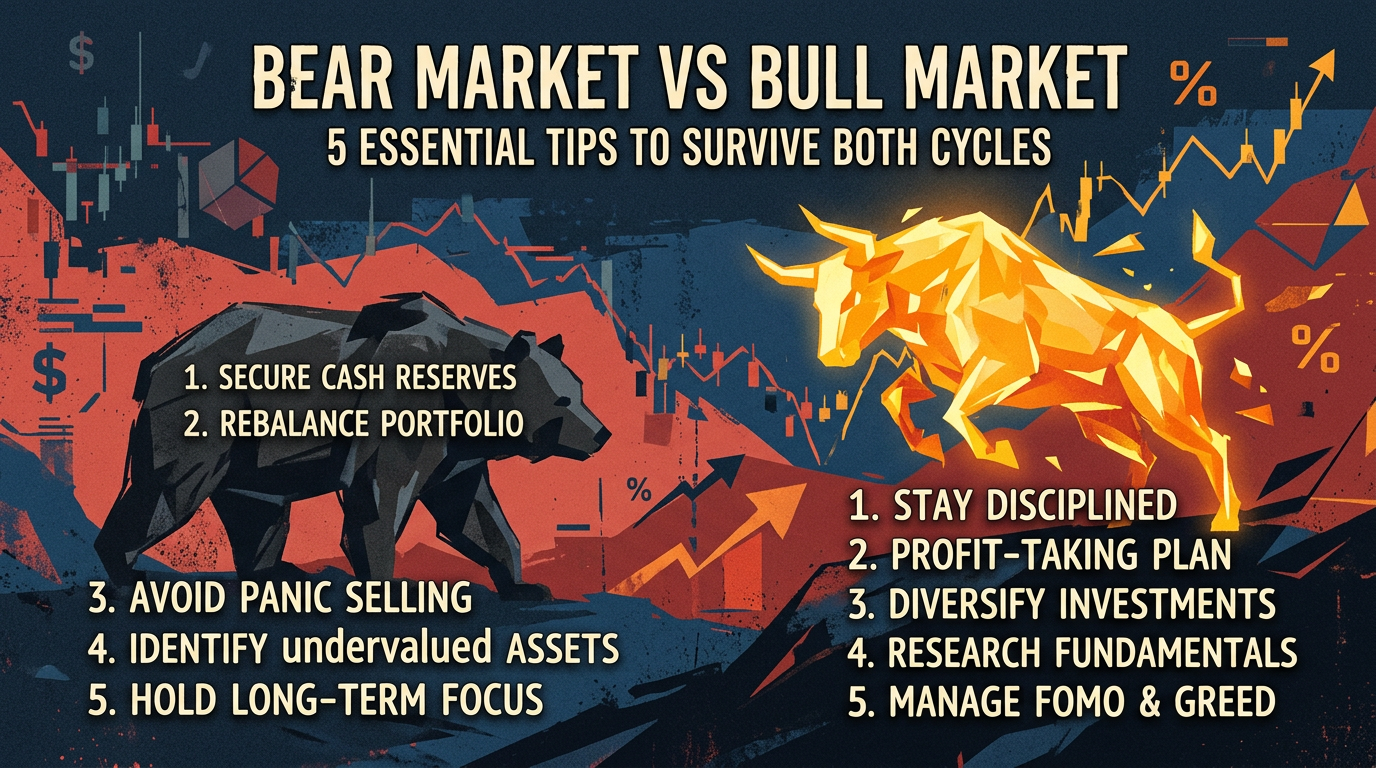
Understanding the difference between a bear market vs bull market is the cornerstone of successful investing. Whether you are a beginner or a seasoned trader, knowing how to navigate these cycles is essential for wealth creation.
In the financial world, market cycles are inevitable. Prices rise, and prices fall. By mastering the dynamics of a bear market vs bull market, you can protect your capital and capitalize on opportunities.
What Defines Market Trends?
Market trends are driven by investor sentiment and economic indicators. When the economy thrives, optimism fuels growth. When uncertainty looms, fear dictates the direction of asset prices.
For a deeper understanding of how these cycles impact your personal finances, check out our guide on money management to build a stronger financial foundation.
1. The Bull Market: When Prices Strike Up
A bull market is characterized by rising asset prices and widespread investor confidence. During this phase, the economy is usually expanding, and employment rates are high.
Investors feel optimistic about future returns. This leads to increased buying activity, which pushes prices even higher. It is a period of growth and prosperity.
In a bull market, even a modest investment of ₹50,000 can see significant appreciation over time. However, it is vital not to get carried away by the hype.
2. The Bear Market: When Prices Swipe Down
Conversely, a bear market occurs when prices fall by 20% or more from recent highs. This phase is marked by pessimism, fear, and economic contraction.
Investors often panic and sell their holdings to prevent further losses. This selling pressure creates a downward spiral in asset valuations.
While a bear market vs bull market comparison might make the bear phase seem daunting, it offers unique buying opportunities for long-term investors. Buying quality assets at a discount is a classic strategy.
3. Key Differences in Market Psychology
The primary difference between a bear market vs bull market lies in investor psychology. Bull markets are driven by greed and hope, while bear markets are driven by fear and panic.
Recognizing these emotional triggers is crucial. When you understand that market movements are often irrational, you can make better decisions.
Always keep an eye on official guidelines from the Reserve Bank of India to understand the broader economic context affecting your investments.
4. Strategies to Survive a Bull Market
Surviving a bull market is about discipline. It is easy to feel like a genius when everything is going up, but you must remain grounded.
- Avoid over-leveraging your portfolio.
- Continue your SIPs (Systematic Investment Plans) regardless of the hype.
- Take profits periodically to rebalance your asset allocation.
Even in a bear market vs bull market cycle, maintaining a balanced portfolio is the best defense against volatility.
5. Strategies to Survive a Bear Market
When the market swipes down, your goal is capital preservation. Do not rush to sell your assets in a panic.
- Focus on high-quality stocks with strong balance sheets.
- Increase your cash reserves to take advantage of lower prices.
- Maintain a long-term perspective rather than reacting to daily news.
By staying calm, you can turn a bear market vs bull market cycle to your advantage. Remember, bear markets are temporary, but the wealth you build during them can be permanent.
Ultimately, the bear market vs bull market distinction is simply a part of the economic rhythm. By staying educated and disciplined, you can thrive in any market condition.